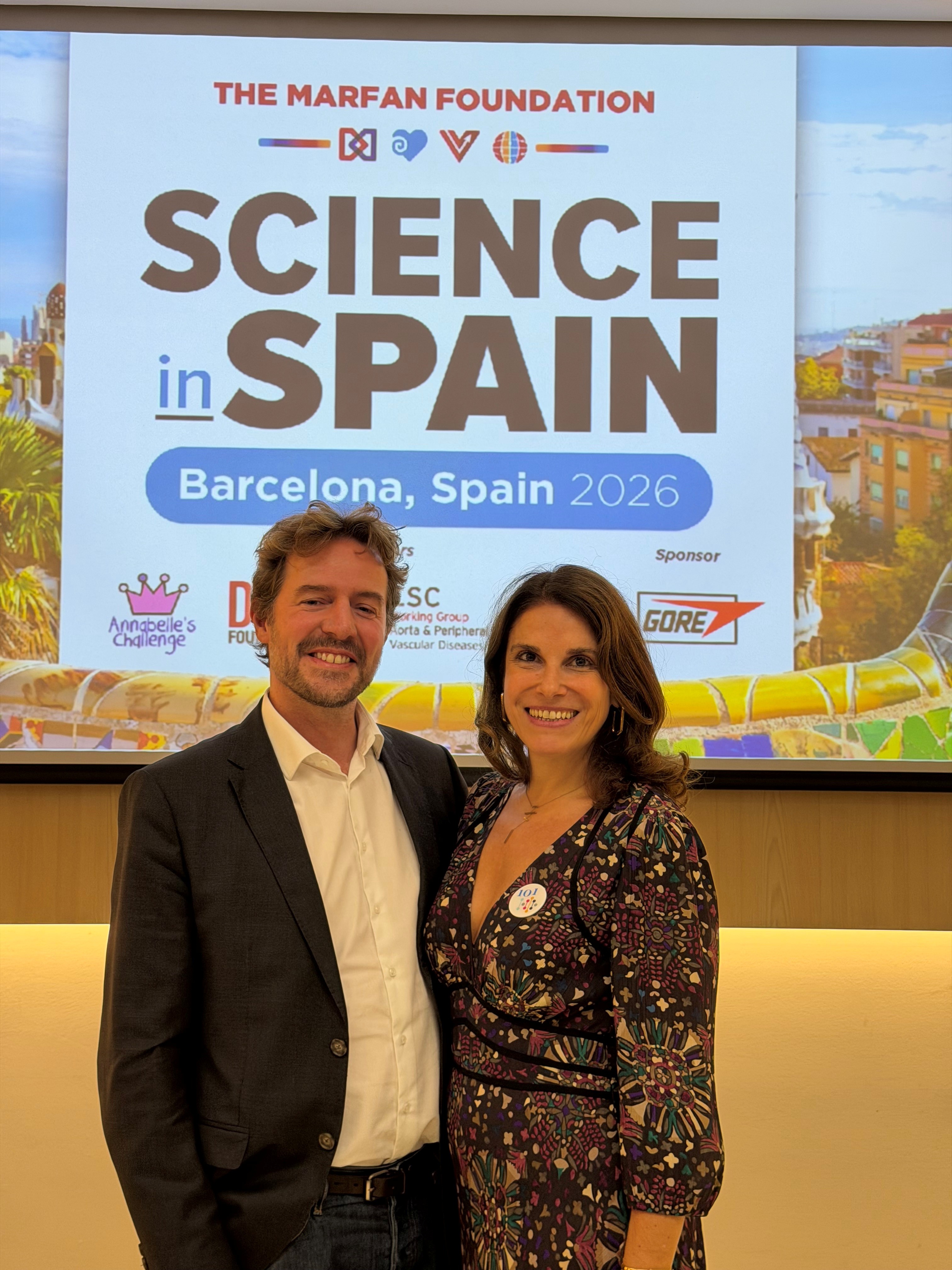
We were proud to see the work of 101 Genomes featured at this year’s Science in Spain symposium, where researchers, clinicians, patient advocates and families from around the world came together to share the latest advances in Marfan syndrome research and care.
New insights from the first 50 genomes collected by 101 Genomes
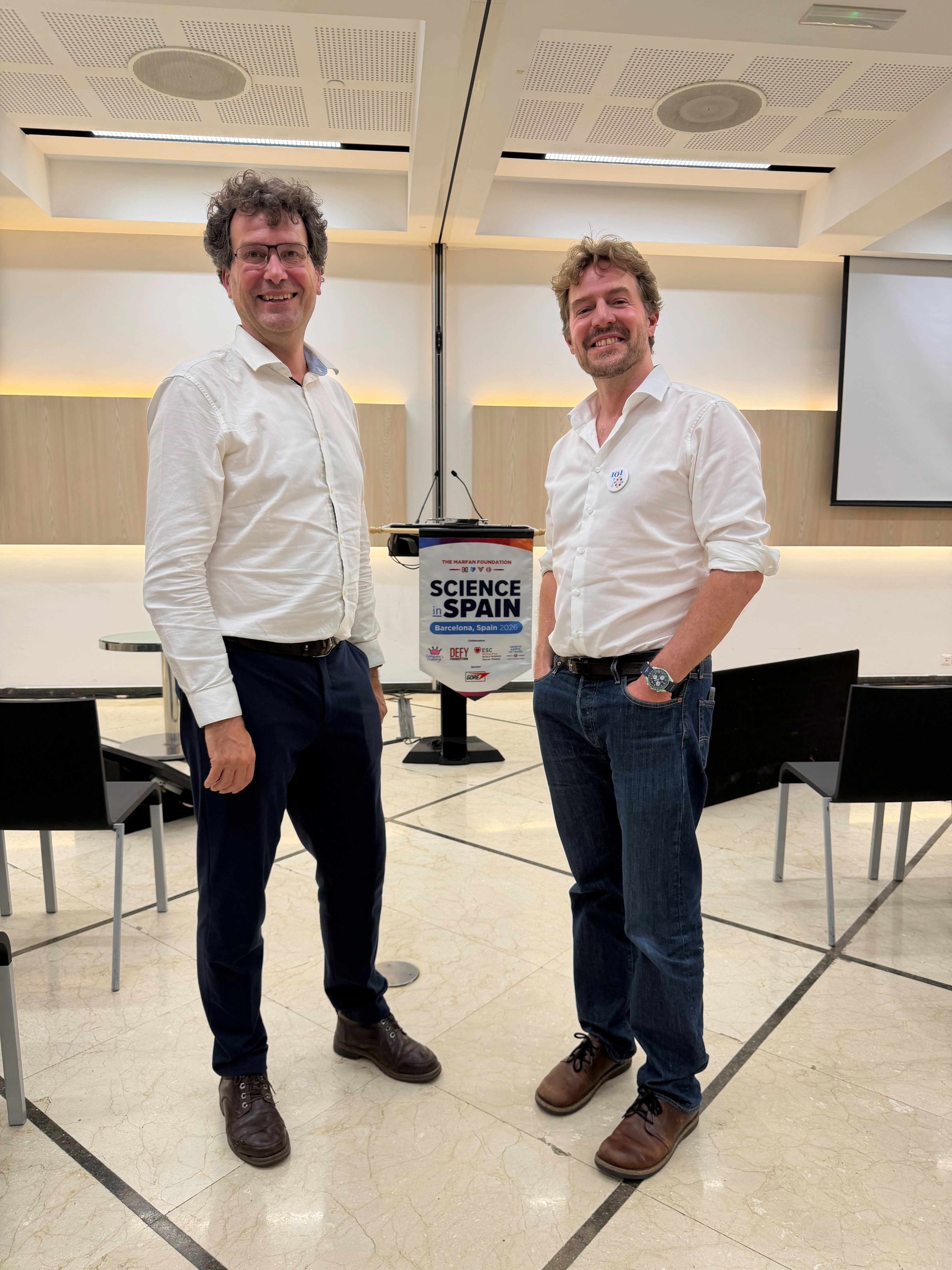
One of the highlights of the meeting was the presentation by Prof. Bart Loeys, who shared exciting findings from GEMS research conducted together with Lotte Van Den Heuvel.
Their work identified a potential protective modifier gene, which may help explain why some individuals carrying the same FBN1 variant experience milder symptoms than others. Understanding these differences could ultimately improve risk prediction and patient care.
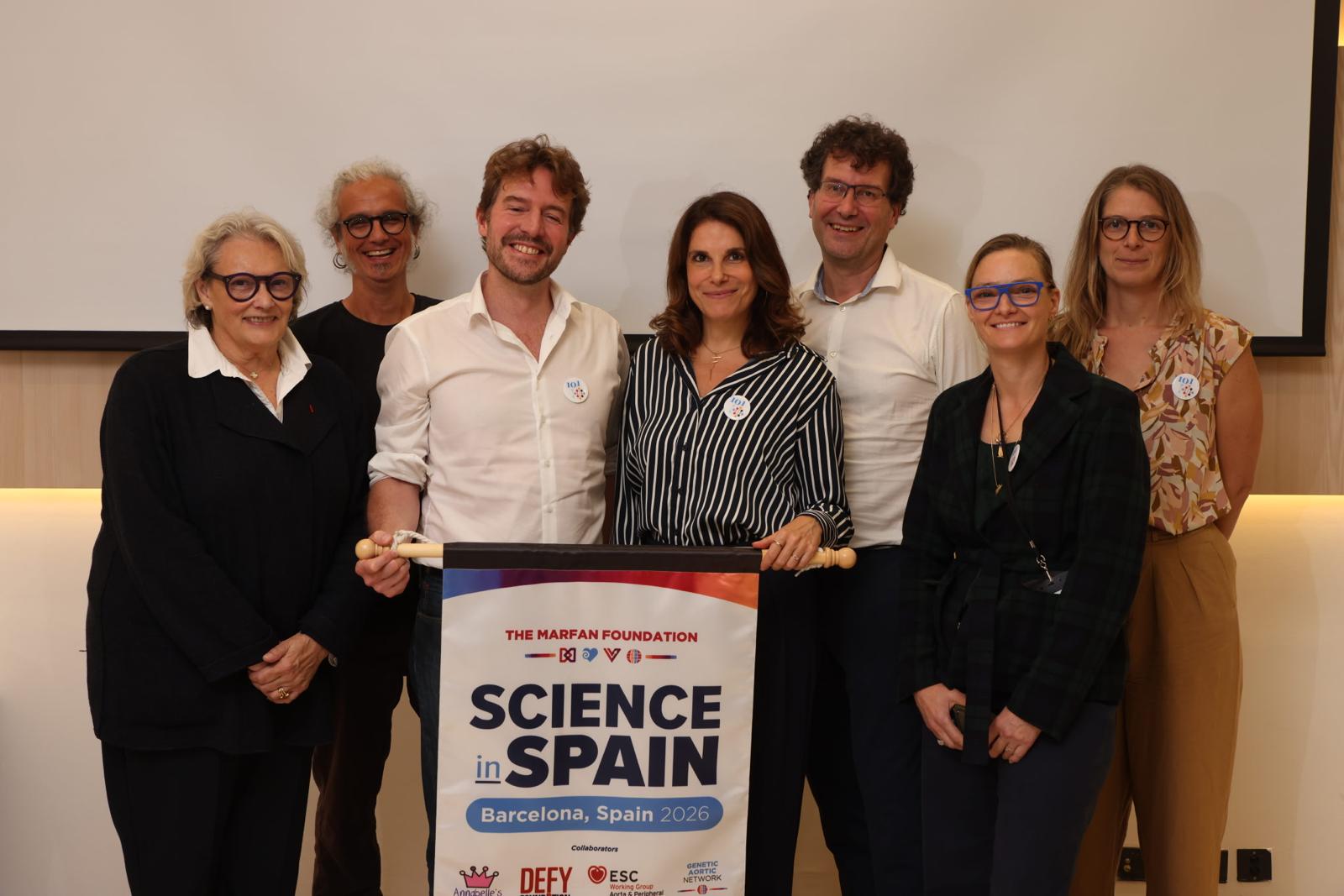
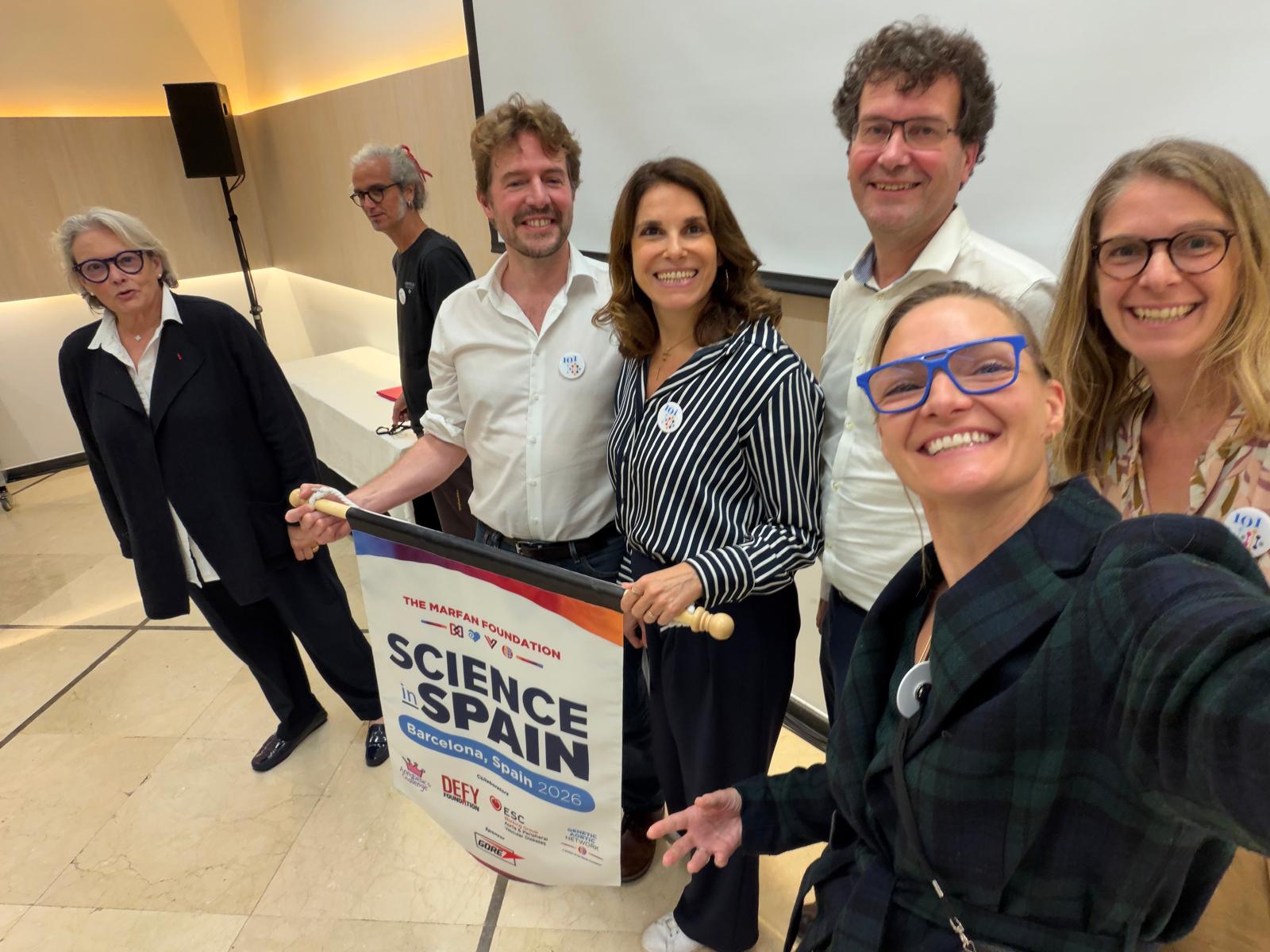
We were particularly proud to see that this GEMS research was made possible using the first 50 genomes collected by 101 Genomes and was based on the research methodology developed by our Scientific Committee, including Julie De Backer, Guillaume Jondeau and Catherine Boileau, who were also present at the symposium.
The results presented by Bart identify a potential protective modifier that opens paths towards better risk prediction and, in time, new treatments.
The journey does not stop there. We are delighted that 185 newly sequenced genomes (collected worldwide thanks to the GEMS-App!!!) are now being added to GEMS research cohort, allowing Bart and his team to return to the laboratory with an even larger dataset to expand upon and validate these promising findings.
If you haven’t already done so, please do join GEMS for Marfan – as every participant counts!: https://www.101gems.be/
Bart’s presentation can be viewed here 👉 https://youtu.be/tHyBcahBjXU?si=tedkFzWw4a0IACgA
Increasing focus on patient-centred care
As expected, aortic dissection, one of the most serious risks faced by people living with Marfan syndrome, was a major topic throughout the conference.
What was equally encouraging, however, was the growing emphasis on patient-centred care. Across both research and clinical practice, there was clear recognition that improving outcomes means not only advancing scientific knowledge but also addressing the realities of living with the condition.
In this regard, the work presented by Catherine Isadora Côté, exploring the gap between clinical recommendations and real-world care, stood out as a particularly important contribution. Research of this kind has the potential to meaningfully improve the patient experience.
Celebrating innovation: the PEARS technique
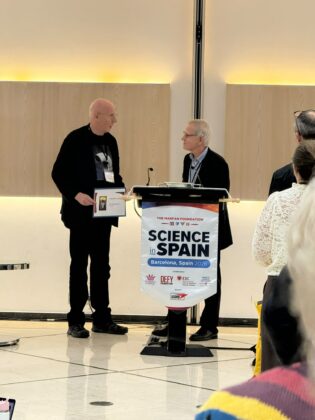 We were also deeply moved to witness Tal Golesworthy receive an Innovation Award for his pioneering work on the PEARS technique.
PEARS (Personalised External Aortic Root Support) uses a custom-made external sleeve, designed from a 3D model of the patient’s aorta, to provide support and protection against dissection.
What makes this achievement even more remarkable is that Tal, himself a Marfan patient and engineer, first conceived, developed and tested this solution on himself.
The determination to create solutions from lived experience and having literally ‘skin in the game‘ is something that has inspired us at 101 Genomes, and it was an honour assisting to the recognition of Tal’s extraordinary contribution.
Continuing the effort in Neonatal Marfan syndrome
 The symposium also provided an opportunity to reflect on the challenges posed by Neonatal Marfan syndrome, one of the most severe and least understood forms of the disease.
While many questions remain unanswered, the research presented reinforced our belief that progress is possible. This topic is particularly close to the hearts of everyone involved with 101 Genomes, and we are grateful for the support and engagement of individuals such as Allison Pullins, Emily Hardman and Shaine Morris, who are helping move the field forward.
The value of collaboration
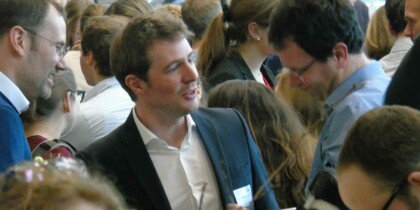
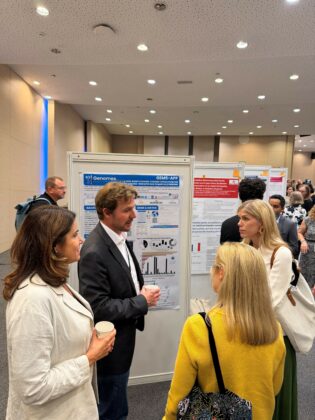
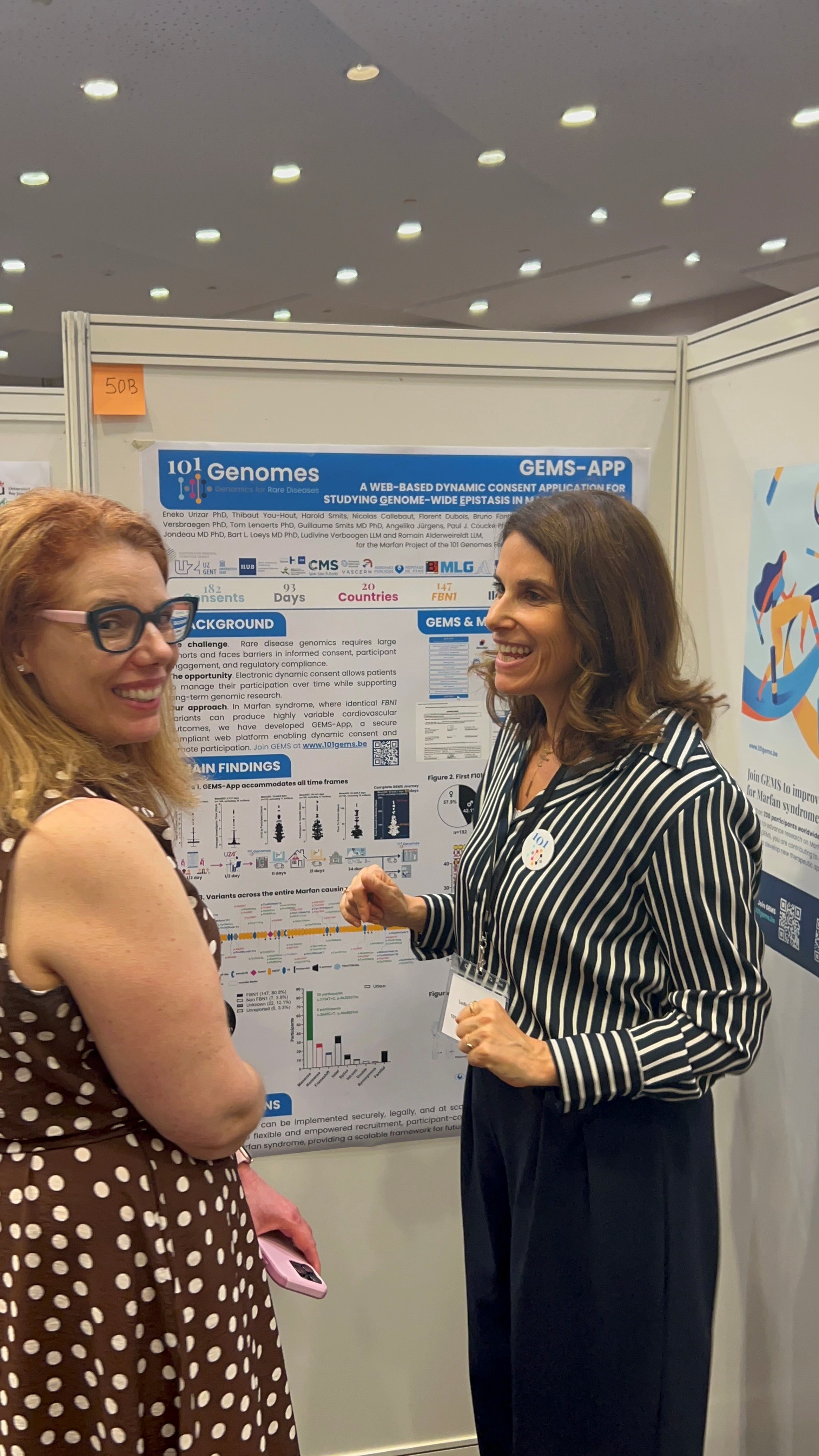
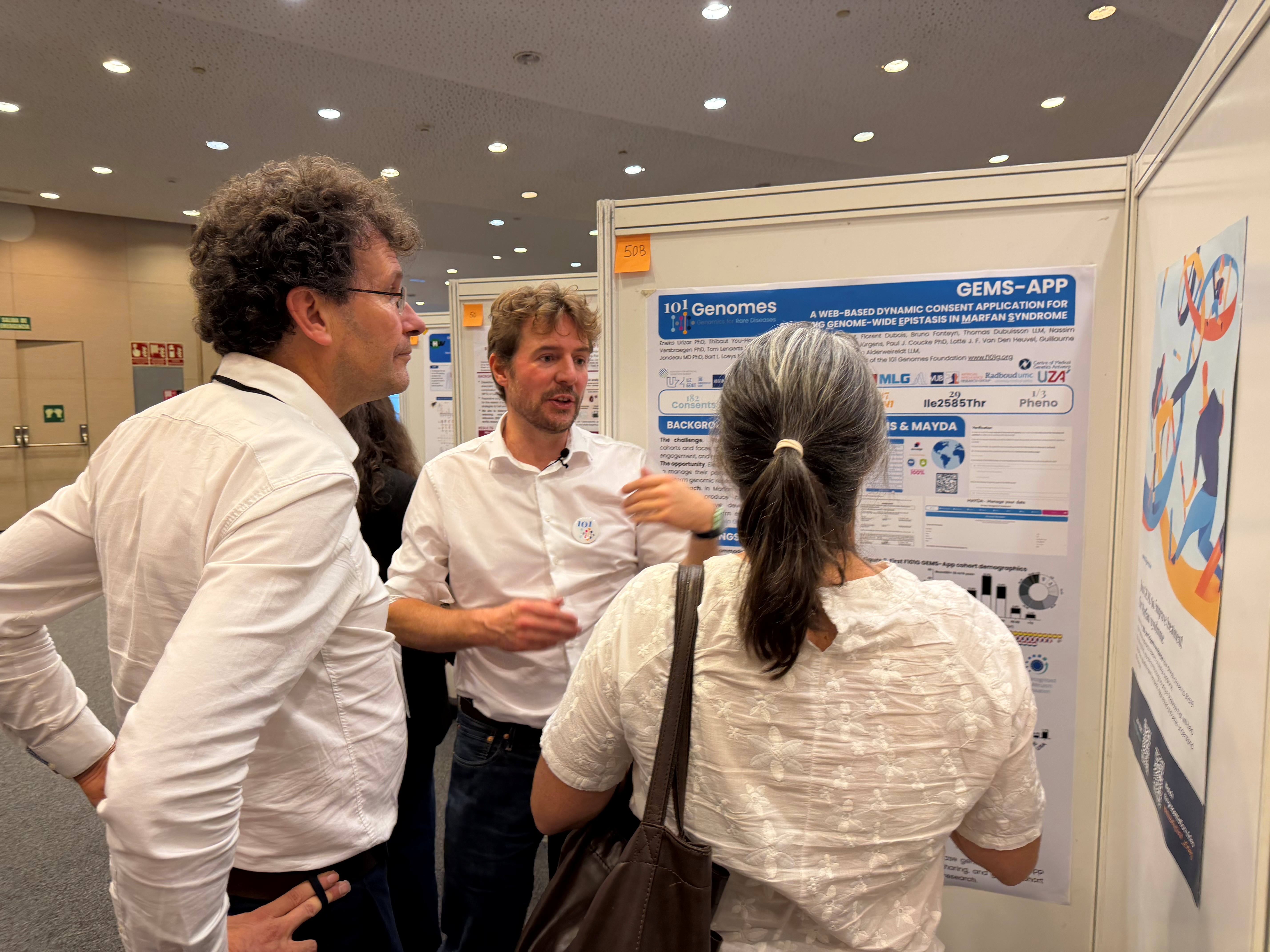
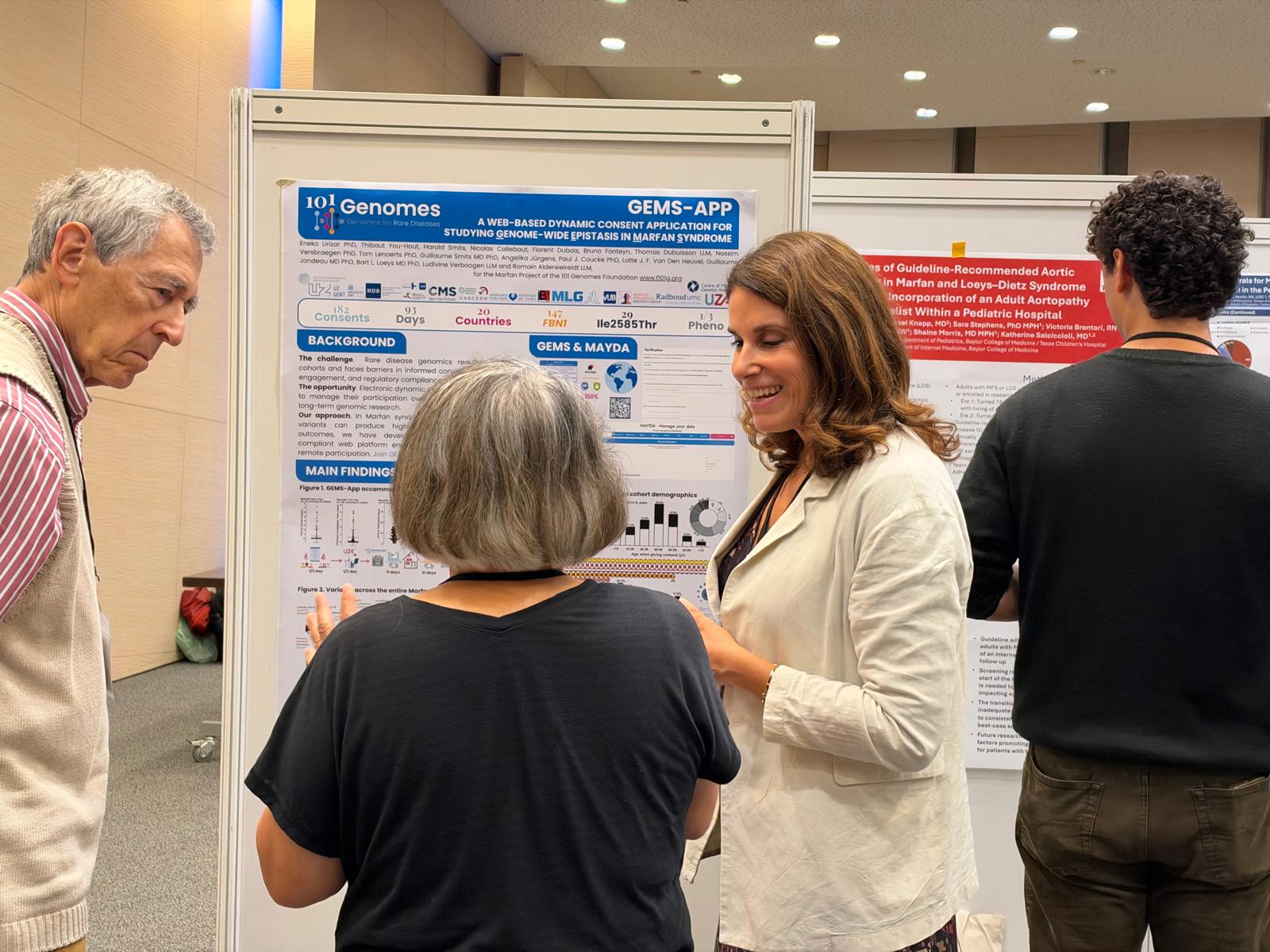
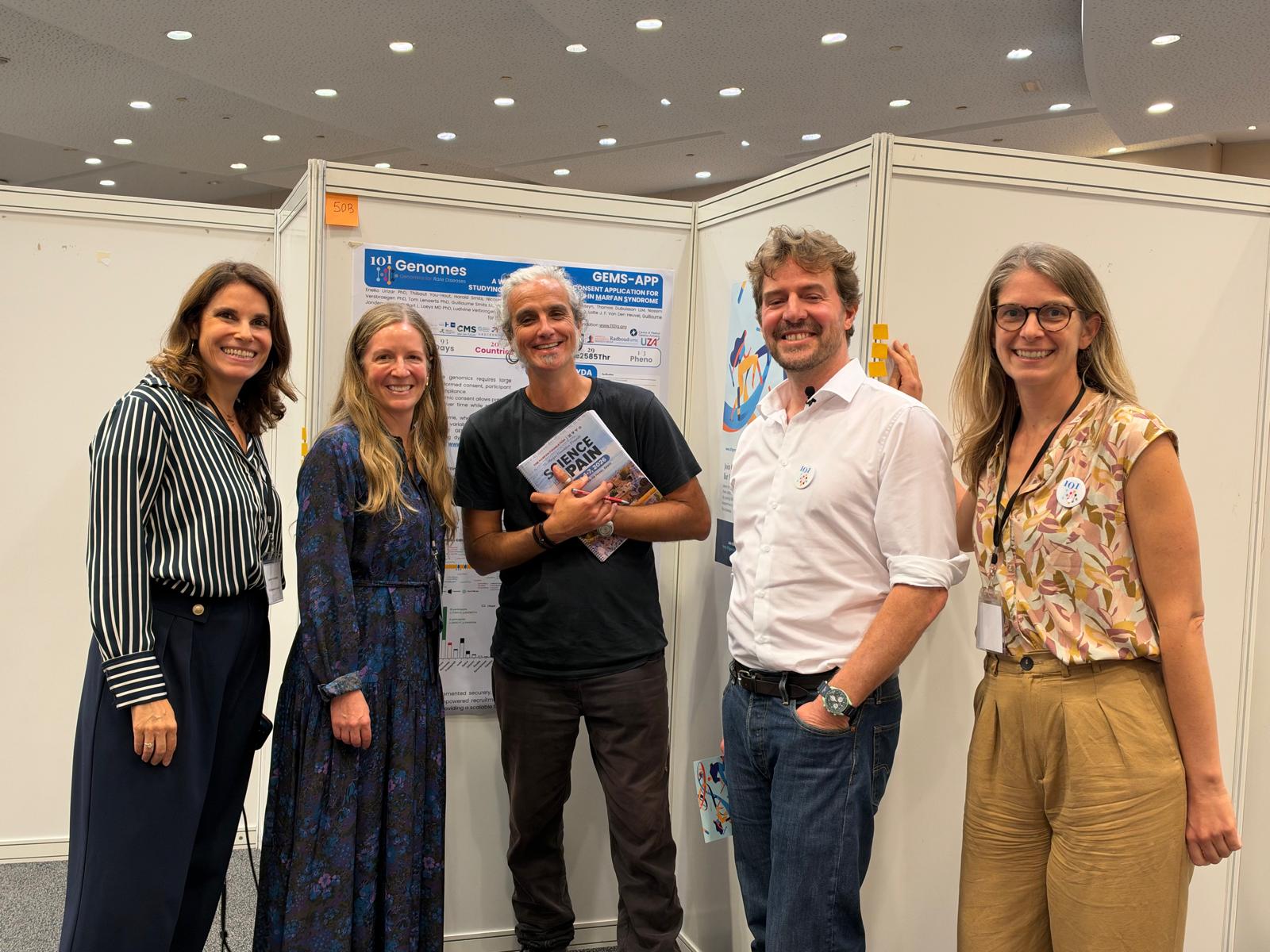
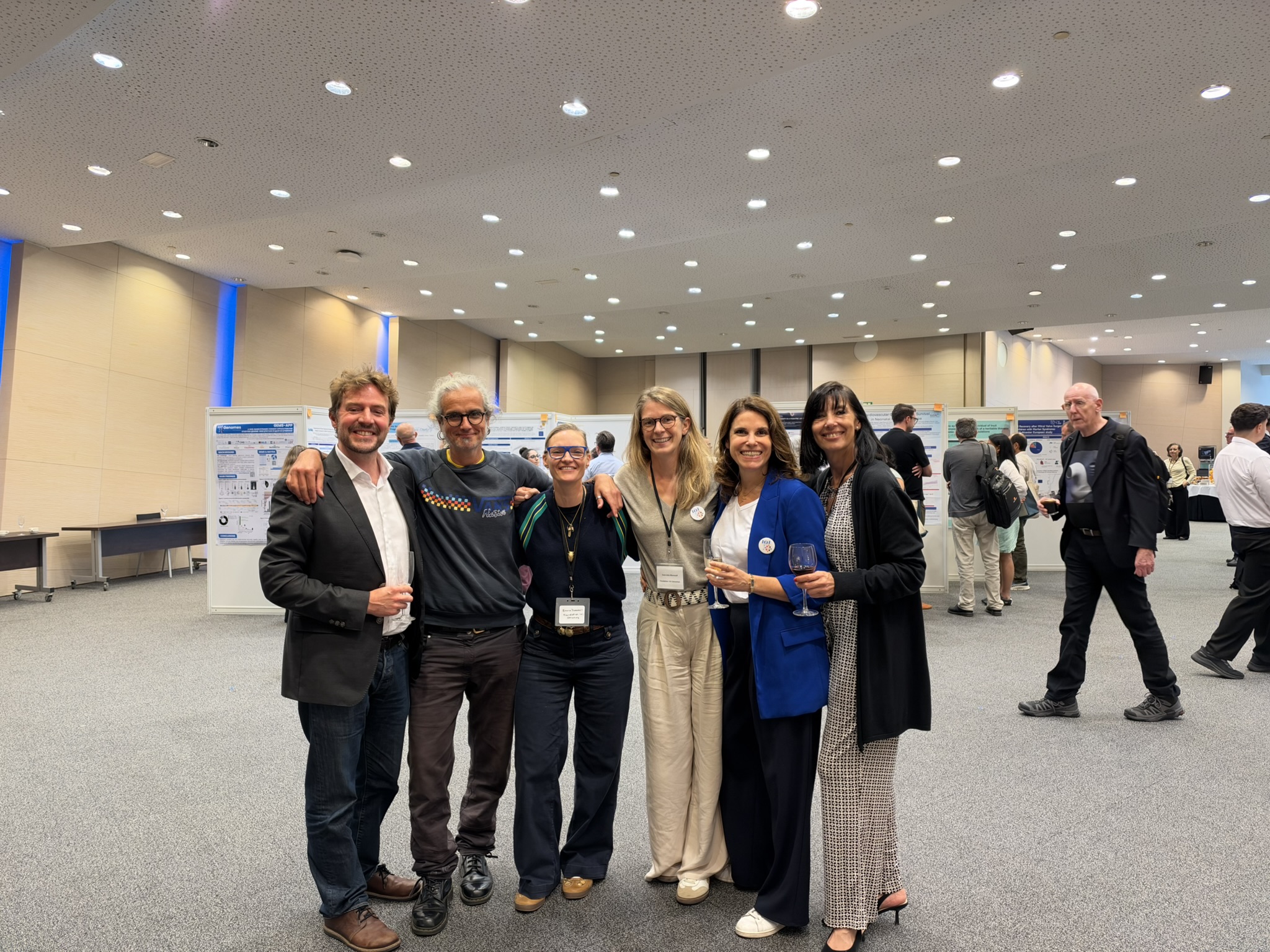
Finally, our poster sessions provided wonderful opportunities to engage directly with participants, exchange ideas, discuss challenges and connect one-to-one with researchers and patients from across the globe.
A huge thanks to The Marfan Foundation for hosting us and for the whole event!
Cette publication est également disponible en :