Mission

Our mission

The quest for protective genes

Why are some children sick when they shouldn’t be? Why aren’t some adults when they should be? Part of the answer to these questions lies in our genes.

In the context of rare diseases, this response would make it possible to envisage therapies for diseases that are currently incurable.

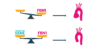
101 Genomes enables researchers to embark on the quest for protective genes capable of counteracting the impact of the mutation that causes the disease.

The identification of potential protective genes within the genome could lead to new therapeutic avenues that would replicate their protective effects.
One mission, four pillars

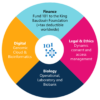
101 Genomes’ mission is to facilitate genome exploration to better understand and treat rare diseases.

Its Genomic Cloud contains the complete genomic data (WGS) of people with rare diseases and “control” individuals, enabling researchers and bioinformaticians to better understand the interactions between genes and the mechanisms underlying rare diseases.

Its Biobank preserves the biological samples of participants in the research it supports.

Its innovative data collection and dynamic consent management solutions ensure that participants have full control over their data and can express truly informed consent.

Finally, our partnership with the King Baudouin Foundation guarantees the deductibility of donations and the optimal management of gifts and bequests entrusted to us.

These 4 pillars of the 101 Genomes model’s success can be transposed to other rare and less rare diseases.
Our history

Ludivine and Romain Alderweireldt-Verboogen created 101 Genomes to help people who, like their young son, are affected by rare diseases. Their work begins with Marfan syndrome, a rare connective tissue disorder resulting from a variant on the FBN1 gene.

By analyzing a genetic database of healthy individuals, Romain discovered numerous variants of the FBN1 gene considered pathogenic in the literature, but present in people without symptoms. This suggests the existence of protective genes capable of compensating for the failure of the FBN1 gene. This discovery, since confirmed by research, triggered their initiative.

Their ambition is to enable the identification of these protective genes in order to replicate their effects through drugs, possibly repositioned, to better treat Marfan syndrome. They also observed that these protective mechanisms are involved in other rare diseases, such as cystic fibrosis, and that their approach can be applied to many pathologies to accelerate the discovery of new therapies. Thus, 101 Genomes was designed to extend to a wide range of rare diseases.
 

Genomics & algorithms

101 Genomes supports genomic and bioinformatics research to better diagnose and treat rare diseases. Its aim is to make available to researchers a biobank containing the complete genomic data (WGS) of people with rare diseases and “control” individuals. This Genomic Cloud will enable researchers and bioinformaticians to better understand the interactions between genes and the mechanisms underlying rare diseases.

According to Professor Anne De Paepe, Prorector of Ghent University, this is “a unique and unprecedented example of patient participation in scientific research “.
Our Key Dates

  • 2025

  • 2024

  • 2023

  • 2022

  • 2021

  • 2020

  • 2019

  • 2018

  • 2017

  • 2016

  • 2015

2025

March 20: scientific evening with Professors Catherine Boileau and Michel Goldman at Delen Bank in Brussels

May 2: 202 genomes collected for GEMS research thanks to the participation of patients from all over the world

September 6: Conference for the English Marfan association, Marfan Trust, Birmingham

October 17: In addition to our partnerships with the Belgian, French, Luxembourgish, Spanish, English, and American Marfan patient associations, the Malaysian Marfan association joins us

November 26: Professor Bart Loeys receives the RaDiOrg Edelweiss Prize for his commitment to rare diseases

December 12: 230 participants share their genomes for GEMS research!

2024

February 3: Presentation of the 101 Genomes model to members of the Spanish Marfan Association “Sima”, Madrid

February 5: Thanks to patient participation, the Foundation achieves its initial commitment of raising 101 Marvan Genomes for GEMS research!

February 29: Awareness campaign launched, alongside Toby Alderweireld and the UZA Foundation, to fund GEMS research by Professor Bart Loeys and 101 Genomes.

May 15: 125 marfans share their genomes for GEMS research!

May 28: The Belgian federal government invites 101 Genomes to represent Belgium at a conference organized as part of the Belgian Presidency of the Council of the European Union entitled ” Towards healthcare of the future: AI and Omics Data “.

2023

January 20-21: At the invitation of VASCERN, seminar dedicated to the work of 101 Genomes for representatives of European patient associations

February 2: Collaboration with Microsoft

March 31, 2023: Presentation of the model developed by 101 Genomes at the symposium ” Patient Access to Innovation: Learnings from Rare Diseases” organized by the Institute for Interdisciplinary Innovation in healthcare (I3H), and round table discussion with Professor Guillaume Canaud (APHP Paris).

May 13, 2023: Event organized in conjunction with the Marfan US Foundation, an American patient association

May 31, 2023: Romain and Ludivine interviewed for the “Meet the boss” program on Radio Judaica, Brussels.

June 24, 2023: Presentation at the UZA during the First Loeys-Dietz Syndrome Days (Marfan-related syndrome).

July 4, 2023: Presentation of 101 Genomes at the annual meeting of Rare Disease Fund members at the King Baudouin Foundation.

October 21: Presentation of 101 Genomes at the RaDiOrg members’ day, the umbrella association of rare disease patient associations in Belgium

November 24: 94 marfans share their genomes for GEMS research

November 29, 2023: Meeting on Data Altruism with SITRA, the Finnish Innovation Fund, to share the model developed by 101 Genomes at the European level.

December 8: Romain takes part in the TV program “Demain” on LN24, devoted to the medicine of the future with Prof. Michel Goldman and Prof. Jean-Michel Foidart.

2022

April 5: Approval of the 101 Genomes Biobank by the ERASME Ethics Committee, followed by recognition by the FAMHP

July 10: Receipt of the first 47 genomes (WGS) from marfans on the 101 Genomes Genomic Cloud

September 15-18: participation in the Marfan European Network congress, Paris

October 1: Approval by the UZA Ethics Committee of the Web App for collecting and managing consent for the GEMS study, followed by approvals by the Ethics Committees of UZ Gent and UMC Groningen.

November 26: Participation in the “Marfan and innovations” scientific day organized by the Belgian Marfan Syndrome Association.

2021

June 26: Conference for the French association “Marfans”

July 14: Inauguration of the 101 Génomes Genomic Cloud

November 29: Charity evening at the Filigranes bookshop, attended by several authors including Philippe Geluck

2020

September 28: Participation in the US Marfan Foundation International Summit

December 2: Genome4Brussels: Innoviris grant for the development of the Genomic Cloud and bioinformatics tools for genomic data analysis in collaboration with the ULB Machine Learning Group, theInteruniversity Institute of Bioinformatics Brussels and the Erasme Human Genetics Center.

December 16: Presentation of the Francqui 2020 prize to Prof. Bart Loeys and FWO funding for the GEMS study led by Prof. Bart Loeys (UZA) and Prof. Paul Coucke (UZGent).

2019

March 23: Conference for the Luxembourg Marfan Syndrome Association

March 29: Participation in the King Baudouin Foundation’s consultation “My DNA, all concerned”, gathering citizens’ opinions on the use of genome data in healthcare.

May 3: Application for an Innoviris grant from the Brussels-Capital Region

May 14: Participation in the Erasmus Fund Gala

September 19: Participation in the Marfan Europe Network meeting

October 3: Creation of fair genomics, a limited liability company owned by 101 Genomes, to support the transfer to the public of technologies and innovations developed by the Genome4Brussels consortium.

October 10: Celebration of the 20th anniversary of the Belgian Marfan Syndrome Association at the Belgian Academy of Sciences.

November 10: Launch of the“impatients!crowdfunding campaign.

2018

January 19: First meeting of the Scientific Committee, attended by Professors Julie De Backer, Bart Loeys, Anne De Paepe, Paul Coucke, Guillaume Smits and Catherine Boileau. The Scientific Committee was subsequently enlarged to include Guillaume Jondeau and Tom Lenaerts.

March 10: RaDiOrg’s Edelweiss Prize awarded to Romain for his work on behalf of rare diseases

June 8: Second scientific committee meeting: launch of GEMS research, the search for protective genes in Marfan syndrome

2017

May 15: Study of the “Resilience Project” publication and replication by Romain of the method in the context of Marfan syndrome

June 15: Discovery by Romain of an FBN1 intersection between Marfan patients (UMD-FBN1) and “control” individuals (gnomAD)

July 23: Drafting of a ‘White Paper’ underpinning the 101 Marfan Genomes Project and the 101 Genomes Foundation

November 10: Creation of the 101 Genomes Foundation

November 17: Opening of the 101 Genomes Fund at the King Baudouin Foundation.

2016

August 4: Announcement of the genetic diagnosis following the identification of a spontaneous mutation in the FBN1 gene

August 11: Diagnostic clarification: the spontaneous mutation identified is located in a part of the gene (exons 24-32) often associated with the most severe forms of Marfan syndrome (neonatal / rapid onset).

August 12: Start of Romain and Ludivine’s research, accompanied by Professor Guillaume Smits.

2015

September 3: Birth of Aurélien

September 11: Suspicion of connective tissue disease and first mention of Marfan syndrome.

Bodies

The Board of Directors of the 101 Genomes Foundation is composed of four statutory directors.

King Baudouin Foundation

101 Genomes has partnered with the King Baudouin Foundation to jointly manage the 101 Genomes Fund, intended to raise the necessary funds for its activities.

Donations made to 101 Genomes are paid into an account held by the King Baudouin Foundation and are tax deductible.

Our partnership with the King Baudouin Foundation guarantees that donations are tax-deductible in all European countries and in many countries outside the European Union.
Support 101 Genomes

By supporting our work, you are primarily supporting research dedicated to Marfan syndrome, but you are also more broadly supporting a genomic approach that benefits numerous research groups active in the field of rare diseases.