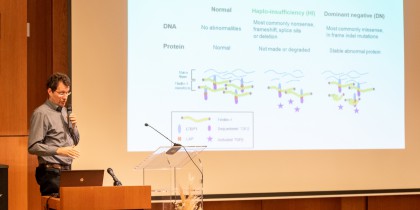
101 Genomes’ quest published in the American magazine ‘The Atlantic’

From Belgium to The Atlantic: 101 Genomes honored on the international stage
What began as our family quest facing neonatal Marfan syndrome has become, over the years, a scientific initiative recognized far beyond our Belgian borders, with findings that can be applied to many other diseases, whether rare or more common.
Today, 101 Genomes is particularly proud to be featured in The Atlantic, one of the most prestigious magazines in the United States. In her article titled “The Genes That Could Cancel Out a Fatal Diagnosis”, science journalist Roxanne Khamsi traces the origins of our work and explores what she presents as one of the most promising fields of modern genetics: the quest for modifier genes at the heart of our mission.
Understanding why some patients defy their genetic ‘destiny’
The article focuses on a fundamental question that currently mobilizes 101 Genomes and other research teams around the world: why do some people carrying genetic mutations associated with serious diseases develop few or no symptoms, while others are severely affected?
Behind this variability may lie protective biological mechanisms that are still unknown. Identifying these factors, whether they are modifier genes or other mechanisms of genetic resilience, could pave the way for new therapeutic strategies for many rare diseases.
This approach has already led to major breakthroughs in conditions such as familial hypercholesterolemia or sickle cell anemia. It is now generating growing interest in many fields of medicine and pharmaceutical research.
The contribution of 101 Genomes
For nearly ten years, 101 Genomes has been bringing together patients, families, clinicians, and researchers around a common goal: to better understand Marfan syndrome and its considerable clinical variability.
Thanks to this commitment, we have built one of the largest genomic cohorts of individuals carrying variants associated with Marfan syndrome. These data offer the best opportunity to date to attempt to identify modifier genes that could explain why some patients develop very severe forms of the disease while others show a much more favorable progression.
As Roxanne Khamsi reports in The Atlantic, the initial results of our work have already highlighted several potential modifier genes, reinforcing the hypothesis that understanding natural protective mechanisms could lead to new therapeutic approaches.
Recognition that extends to our entire community
This spotlight by The Atlantic represents significant recognition for everyone contributing to this scientific journey: the patients who share their data, the families who support the project, the researchers who dedicate their expertise to this mission, and the partners who make this research possible.
Beyond the international visibility it provides, this article also highlights the full relevance of the approach adopted by 101 Genomes, which can be applied to many other rare diseases, as well as the importance of patient-led research and genomic data altruism in accelerating the discovery of new therapeutic horizons.
101 Genomes warmly thanks Roxanne Khamsi and The Atlantic for highlighting our research, its scientific relevance, and the community that supports it.
➡️ Read the article: The Genes That Could Cancel Out a Fatal Diagnosis
➡️ Read the ‘substack’ version: The life-saving DNA of genetic outliers
Cette publication est également disponible en :