“Two parents take on biomedical research to help their children… and those of others!” by Guillemette Pardoux

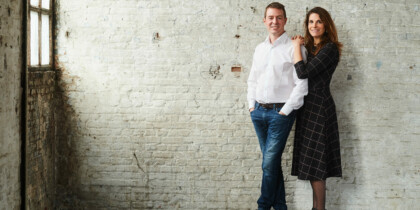
Brussels – Romain and Ludivine, parents of a child suffering from the rare disease Marfan syndrome, have set up a Foundation under the aegis of the King Baudouin Foundation, the 101 Genomes Foundation, to finance the creation of a computerized platform for genomic harvesting and analysis. This innovative bioinformatics tool can be used by researchers wishing to develop their knowledge of the disease, and imagine new therapeutic directions for patients. The couple is mobilizing to raise funds to get the project underway in January 2019.
When the news of a rare disease is announced
Like all parents faced with the discovery of a rare genetic disease in their child, Romain and Ludivine were shocked and dumbfounded. Ludivine : ” Our story began two and a half years ago, with the birth of our son Aurélien. Seven days after his birth, the pediatrician tells us that she suspects a connective tissue anomaly. This marked the start of a diagnostic odyssey that ended eleven months later with the discovery of a spontaneous genetic mutation corresponding to Marfan syndrome.. ”
Aurélien’s parents are worried about their son. The spontaneous variant of the disease sometimes predicts a shorter life expectancy than the hereditary form. Even though their son’s prognosis appears to be good, the couple are becoming aware of the great variability of damage caused by the syndrome.
Coping throughempowerment
To make sense of the incomprehensible, Ludivine and Romain learn to master their fears. Understand the biological mechanisms that cause their sons to suffer, the role of genes in the production of proteins that help the human body function properly, and the consequences of genetic alteration on the body.
Ludivine : ” We asked ourselves many questions and tried to find answers. Romain went online and typed in the name of our son’s genetic mutation, and we discovered an abundance of scientific literature, thanks to the existence of an open-access database (http://www.umd.be/FBN1/). “.
Discovering the great unknowns of research
Romain and Ludivine are also quick to grasp the great unknowns of research: ” Affectations vary greatly from one individual to another, even within the same family of hereditary Marfans. Scientists are at a loss to understand this huge variability. ”
With the help of renowned geneticist Guillaume Smits, Romain and Ludivine discover a field previously unknown to them : genomics.
[2]
. This scientific discipline, which studies the human genome, could provide keys to understanding the great variability in expression of Marfan syndrome.
Innovating through genomics
From prolific readings to fruitful encounters, Romain and Ludivine take action.
The couple set up a foundation under the aegis of the King Baudouin Foundation – the 101 Genomes Foundation – to contribute to the development of a bioinformatics database, designed to cross-reference genomic and phenotypic data.
[3]
of 101 people affected by Marfan syndrome.
Romain : ” It is to be hoped that such a tool will provide a better understanding of the disease and the extreme variability of its symptoms. Our dream is to identify modifier genes whose beneficial action could be replicated by drugs. “.
Collective energy in an open science approach
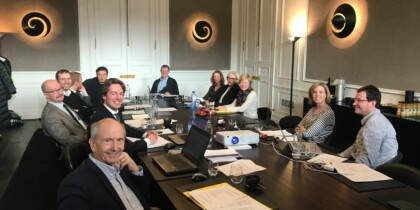
To make their project a reality, Romain and Ludivine enlisted the help of some big names in research. Gathered around a Belgian core group, Prof. Anne De Paepe, Julie De Backer, Bart Loeys, Guillaume Smits, the group expands to Europe with the arrival of the French Prof. Catherine Boileau and Guillaume Jondeau (also member and Chairman of the European cardiovascular disease research network : VASCERN).
Romain : ” The basic idea is to give scientists access to the genomic information that new-generation sequencers can now provide .
” The advantage of our approach is that it is not focused on a single team of researchers. By setting up the bioinformatics tool, we are enabling the whole community to carry out research, while at the same time enabling the various teams to make substantial savings by not having to set up patient cohorts and, above all, finance sequencing
[4]
complete genome sequencing “(quoted in King Baudouin Foundation website).
And to conclude : ” Once this bioinformatics platform has been set up for the 101 Marfan Genomes Pilot Project, we hope that the method can be replicated for other projects involving other rare diseases “.
The 101 Genomes Foundation – under the aegis of the King Baudoin Foundation
- Created in November 2017
- Founded by Romain Alderweireldt and Ludivine Verboogen, parents of a child with Marfan syndrome
- Objective : to raise 700,000,- euros over 10 years to finance the creation of a bioinformatics database containing genomic and phenotypic data on 101 patients suffering from Marfan syndrome.
- Agenda : we hope to begin operations in January 2019 over a 10-year period.
- Scientific Committee : Prof.. Anne De Paepe, Julie De Backer, Bart Loeys, Guillaume Smits, Catherine Boileau and Guillaume Jondeau
Guillemette Pardoux[1]
Press contact : Ludivine Verboogen +32(0)476.87.18.63 – ludivine.verboogen@f101g.org
[1] Ms Guillemette Pardoux : Scientific Communications Manager, Inserm, Paris and member of the French Marfans Association.
[2] Genomics : branch of genetics that studies genomes, i.e. all the hereditary material composed of nucleic acids (DNA or RNA) of a cell, organism or species.
[3] Phenotypic : referring to the set of apparent characteristics of an individual.
[4] Sequencing : DNA sequencing involves determining the sequence of nucleotides in a given DNA fragment. The DNA sequence contains the information necessary for living beings to survive and reproduce.