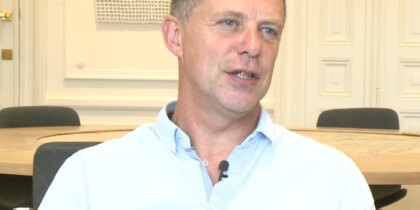
“Transforming drama into a creative force” by Prof. Dr. G. B. Guillaume Jondeau

1. Could you please introduce yourself?
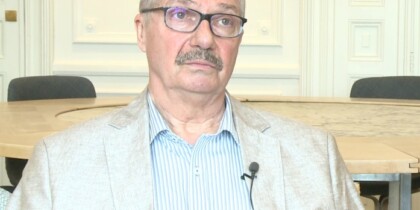
My name is Guillaume Jondeau, and I’m a cardiologist at the Hôpital Bichat in Paris. I’m also in charge of the national reference center for Marfan syndrome and related diseases at Bichat Hospital, the French rare vascular disease network and the European network called VASCERN. European Rare Disease Network “, also on rare vascular pathologies.
2. Can you tell us about the 101 Marfan Genomes Project?
P101GM aims to explain some of the variability in the severity of a particular pathology, Marfan syndrome, that we don’t know how to explain today. Understanding the factors behind this variability can help predict the severity of an individual’s disease, providing prognostic information. ;it can also help us to understand the factors responsible for a severe or less severe form of the disease, and possibly play on these factors to favor less severe forms, and eventually lead to a cure. The potential benefits go beyond Marfan syndrome, since aortic aneurysms (i.e. dilatation of the aorta) are observed in a much larger population than Marfan syndrome. Understanding what causes aortic dilatation in Marfan syndrome may be applicable to other cases of aortic dilatation.
Marfan syndrome combines disorders of different systems. The prognosis is centered on cardiovascular damage, since there is a risk of aortic dilation and rupture, but there is also ophthalmological damage, which can lead to blindness, skeletal damage, which can lead to scoliosis, thoracic deformation and hence pain and discomfort, skin damage, neurological damage and so on. These different systems can each be affected to a greater or lesser degree. And we can’t predict the severity of damage in one system based on the severity of damage in another. The aim of P101GM is to investigate the genetic determinants that may explain the severity or lack of severity, initially in the cardiovascular system, but in the medium term in the other systems associated with Marfan syndrome, which is itself associated with a mutation in a particular gene.
3. Why did you agree to join the Scientific Committee of the 101 Genomes Foundation’s Marfan 101 Genomes Project?
It’s important for me to participate for many reasons :
The first is that it’s a subject I’ve been working on for decades. We founded the first Marfan syndrome consultation in France in 1996, so it’s really been several decades !
The second is that it’s a fundamental question that we haven’t been able to answer until now, and it remains one of the challenges to try and explain why some genetic diseases are severe and others are not. The answers may have implications not only for Marfan syndrome, but also for the way we approach the problem.
The third is that it’s the fruit of the efforts of two very special people: the mother and father of a child with Marfan syndrome. They have transformed this drama into a remarkable creative driving force. They have a weight to pull everyone behind them that is unique and so the project is progressing at a really impressive speed. Everyone is drawn, pushed and pulled by their momentum. It’s remarkable and highly motivating. To have someone who is motivated by a personal story and who is able to build a kind of scientific consensus behind it, because he can understand what it’s all about, is an extraordinary strength, because he doesn’t encroach on anyone else’s domain, and he adds a particular sensitivity that scientists don’t have, even if they know the pathology very well, even if, by dint of their interest in it, they are more or less directly concerned.
4. As a scientist, what do you expect from the 101 Genomes Foundation’s 101 Marfan Genomes Project?
The expectations of this project are manifold. First of all, there are the expectations of scientific results, which are to explain variability. From there, to be able to treat people or give them more precise information and treat not only Marfans but people with other, related pathologies.
Expectations are also to take part in something that is international, since the Committee includes not only Belgium but also the French. join international consortia, the Montalcino Aortic Consortium, and also integrate this project into another European project on rare diseases, the European Reference Network , which I’m in charge ofwhich is one of the reasons I’m here. So there are a lot of factors coming together to make this a very worthwhile venture.
5. What do you see as the key element that makes the 101 Marfan Genomes Project important for Marfan patients? What about other rare diseases?
This project will have a number of consequences for patients. Firstly, it’s reassuring to see that people are working together on a rare pathology that affects you. It’s good for patients’ hearts to see that there’s work going on in which they are the direct or indirect beneficiaries. Another spin-off is that if we understand the factors that explain the severity of Marfan syndrome pathology, we’ll perhaps understand more easily what explains the severity of other syndromes… If we understand what makes a disease severe and what makes a disease not severe, and if we can use this information to make patients’ diseases less severe, patients will benefit directly, not today, perhaps not tomorrow, but perhaps the day after tomorrow, in terms of the severity of their personal diseases, not only in Marfan syndrome, but also in other diseases, since the results could perhaps be extended to other genetic or rare diseases.
[embedyt] https://www.youtube.com/watch?v=iqqJ0tUDq8o[/embedyt]
[embedyt] https://www.youtube.com/watch?v=R8AlPI8ReZY[/embedyt]