“Multidisciplinary marfan consultation organized at UCL”. Interview with Prof. Dr. Thierry Sluysmans and Ludivine Verboogen
This interview was published in “Le Chaînon – la revue des associations de patients et de proches” of the LUSS, N° 52 in September 2020.
Le Chaînon (LC) : Ludivine, what is Marfan syndrome?
Ludivine Verboogen (LV): Marfan syndrome is a rare multi-system disease affecting the heart, eyes, lungs and musculoskeletal system.
Patients and their families usually go through a veritable obstacle course to obtain a diagnosis, and then to find the various specialists capable of providing therapeutic follow-up for the damage caused by the disease.
LC: Professor Thierry Sluysmans, what is the multidisciplinary consultation organized at the Université catholique de Louvain (UCL)?
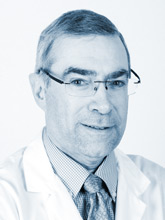
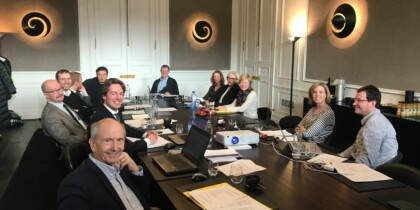
Thierry Sluysmans (TS): The multidisciplinary consultation set up at UCL brings together the various specialists whose expertise is needed to diagnose and monitor Marfan syndrome. The team includes cardiologists, geneticists, ophthalmologists, orthopedists, ENT specialists and speech therapists. During the multidisciplinary consultation, the patient suffering from (or suspected of suffering from) Marfan syndrome is examined in a single morning by these specialists.
LC: Ludivine, what are the advantages of this multidisciplinary consultation for patients?
LV: The global approach speeds up diagnosis of the disease. It then helps to improve the management of this rare multi-system disease. On a day-to-day basis, multidisciplinary consultations change our lives, as they limit the number of consultations with different specialists in different places and at different times, which can be difficult to manage at home and at work.
LC: Professor Sluysmans, what are the benefits for doctors and researchers?
TS: For doctors, multidisciplinary consultations offer the advantage of bringing together all the data in a patient’s medical file, which helps them to monitor the patient’s health as effectively as possible. For researchers, this grouping provides data for scientific research.
LC: Do you have anything to add?
LV: On a personal note, I’m delighted that the consultation set up at UCL exists, and I can only hope that this practice will continue and be extended to other rare diseases.
As a member of the Association Belge du Syndrome de Marfan (ABSM), I must hope that this support will improve even further as children move on to adult consultations.
And, as Vice-President of RaDiOrg, I have to plead for existing multidisciplinary teams to be funded and recognized so that they can develop into genuine Centers of Expertise. This was the aim of the Plan d’action Maladies Rares, which has been decidedly slow to take effect.
By Ludivine VERBOOGEN, mother of a little boy suffering from Marfan syndrome, member of the Belgian Marfan Syndrome Association, Vice-President of RaDiOrg and founder of the 101 Genomes Foundation, and by Prof. Dr. G. M. M. M. D., Director of the Marfan Syndrome Foundation. Thierry SLUYSMANS, pediatric cardiologist in charge of the multidisciplinary Marfan consultation organized at UCL