Mission
Our mission
The quest for protective genes
Why are some children sick when they shouldn’t be? Why aren’t some adults when they should be? Part of the answer to these questions lies in our genes.
In the context of rare diseases, this response would make it possible to envisage therapies for diseases that are currently incurable.
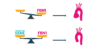
101 Genomes enables researchers to embark on the quest for protective genes capable of counteracting the impact of the mutation that causes the disease.
The identification of potential protective genes within the genome could lead to new therapeutic avenues that would replicate their protective effects.
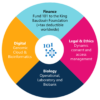
One mission, four pillars
101 Genomes’ mission is to facilitate genome exploration to better understand and treat rare diseases.
Its Genomic Cloud contains the complete genomic data (WGS) of people with rare diseases and “control” individuals, enabling researchers and bioinformaticians to better understand the interactions between genes and the mechanisms underlying rare diseases.
Its Biobank preserves the biological samples of participants in the research it supports.
Its innovative data collection and dynamic consent management solutions ensure that participants have full control over their data and can express truly informed consent.
Finally, our partnership with the King Baudouin Foundation guarantees the deductibility of donations and the optimal management of gifts and bequests entrusted to us.
These 4 pillars of the 101 Genomes model’s success can be transposed to other rare and less rare diseases.
Our story
Ludivine et Romain Alderweireldt-Verboogen ont créé 101 Genomes pour aider les enfants atteints de maladies rares, en commençant par le syndrome de Marfan. En analysant une base de données génétiques d’individus en bonne santé, Romain a découvert de nombreux variants du gène FBN1 considérés comme pathogéniques dans la littérature, mais présents chez des personnes sans symptômes. Cela suggère l’existence de gènes protecteurs capables de compenser la défaillance du gène FBN1. Cette découverte, confirmée depuis par la recherche, a déclenché leur initiative.
Leur ambition est de permettre l’identification de ces gènes protecteurs afin d’en reproduire les effets grâce à des médicaments, éventuellement repositionnés, pour mieux traiter le syndrome de Marfan. Ils ont aussi constaté que ces mécanismes protecteurs interviennent dans d’autres maladies rares, comme la mucoviscidose, et que leur approche peut être appliquée à de nombreuses pathologies pour accélérer la découverte de nouvelles thérapies. Ainsi, 101 Genomes a été conçu pour s’étendre à un large éventail de maladies rares.
Genomics & algorithms
101 Genomes supports genomics and bioinformatics research to better diagnose and treat rare diseases. Its aim is to make available to researchers a bio-bank containing the complete genomic data (WGS) of people with rare diseases and “control” individuals. This Genomic Cloud will enable researchers and bioinformaticians to better understand the interactions between genes and the mechanisms underlying rare diseases.
According to Professor Anne De Paepe, Prorector of Ghent University, this is “a unique and unprecedented example of patient participation in scientific research “.
Our key dates
Oragnisation chart
The Board of Directors of the 101 Genomes Foundation consists of four statutory directors.
Roi Baudoin Foundation
101 Genomes has partnered with the Roi Baudouin Foundation to jointly manage the 101 Genomes Fund, which is intended to raise the funds necessary to finance its activities.
Donations made to 101 Genomes are paid into an account hosted by the King Baudouin Foundation and are tax deductible.
The partnership with the King Baudouin Foundation guarantees the tax deductibility of donations in all European countries and in many countries outside the European Union.
Support the foundation
By supporting our work, you are primarily supporting research dedicated to Marfan syndrome, but more broadly, you are supporting a genomic approach that benefits many research groups active in the field of rare diseases.