1. Could you please introduce yourself?
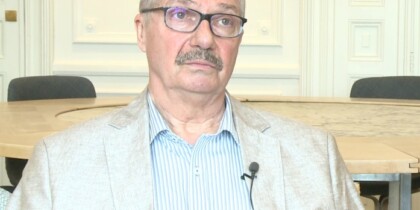
My name is Paul Coucke. I’m a professor at Ghent University in the Department of Medical Genetics, where I’m in charge of the connective tissue laboratory. I supervise diagnostics in the laboratories, i.e. the samples sent to us for diagnostic purposes, and I also supervise research in the laboratory where we carry out research into connective tissue disorders, of which Marfan syndrome is one.
2. Can you explain the 101 Marfan Genomes Project?
The P101GM aims to establish phenotype-genotype correlations. This means that, now that the genome is increasingly accessible due to the development of sequencing technology, it is interesting to look for correlations between gene variations found in this genome and phenotypic expressions in patients. This would help explain why some patients are taller, why they have a characteristic eye problem, why they have aortic malformations or anomalies. Establishing correlations between these anomalies and the variations found in genomes is very difficult. Today, it’s beginning to be possible to carry out this kind of analysis, which wasn’t possible five or even three years ago. It’s a great challenge for P101GM.
3. Why did you agree to join the Scientific Committee of the 101 Genomes Marfan Project?
I’ve been working in genetics research for over 30 years now. I started in 1985. I’ve always been involved in genetics and witnessed its evolution. Over the last five years, this has become extremely interesting because of, as I mentioned, the evolution of genomic sequencing. It’s a technological revolution, and sequencing costs have fallen considerably, giving us access to genomic data.. The intention of P101GM is to use this genome in correlation with the phenotypic characteristics of Marfan patients. I’m a great believer in this approach and I think this project is very exciting.
4. As a scientist, what do you expect from the 101 Genomes Marfan Project?
It’s hard to say what the outcome of this research will be, but its strength lies in the fact that it brings scientists together. Most scientists work in their own departments and laboratories, albeit with good facilities, but each in his or her own corner. Communication between departments or universities only takes place at meetings. In reality, we need to work together, discussing how we should proceed and bringing patients and patient data together. But this is not so common in research centers, and it should be more so. This is the advantage of P101GM: the founders try to bring together as many scientists as possible. There’s a skilled group from Antwerp, a highly specialized group from Ghent, and a highly recognized group of scientists from Paris. Outside P101GM, we have contacts with each other, but they’re just contacts. Here, we have the means to exchange ideas, to discuss, to set up collaborations and to continue working to improve research.
5. What is the key element for you that makes the Marfan 101 Genomes Project important for Marfan patients? And for other rare diseases?
The technical evolution of sequencing, which makes things possible that were never possible before. This is the key. And also, collaboration : we can work alone in our own laboratory, and we do, but we’re much stronger when we act as a group and join forces. These are the two strong points of this project.
Professor Paul Coucke, PhD
Center for Medical Genetics, University of Ghent and Ghent University Hospital, Ghent, Belgium
[embedyt] https://www.youtube.com/watch?v=00p-tpxBoEU[/embedyt]
[embedyt] https://www.youtube.com/watch?v=MaVGxheZNRU[/embedyt]