 Since 2019, the 101 Genomes Foundation has had the privilege of working with three organizations specializing in bioinformatics, genetics and algorithms (IB², CHG and MLG) on the Genomes4Brussels project co-funded by the Brussels region (Innoviris).
Genome4Brussels aims to create an ecosystem to optimize the development of bioinformatics tools for genome analysis and facilitate the transfer of innovation and knowledge acquired during the project to the general public.
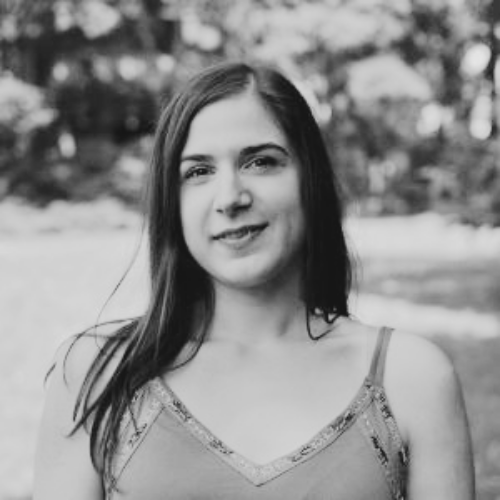
Sofia Papadimitriou, researcher (IB)², answers Ludivine’s questions and explains her involvement in this unique project.
Ludivine – Sofia, can you tell us about your academic career?
Sofia – I graduated with a BSc in Biology in 2013 from Aristotle University of Thessaloniki, Greece, and a MSc in Bioinformatics in 2016 from Wageningen University, the Netherlands. I then went on to do a PhD in bioinformatics and Machine Learning applied to oligogenic diseases at the Université Libre de Bruxelles and the Vrije Universiteit Brussel. I have been involved in the Genome4Brussels project as a postdoctoral researcher since January 2021, while in October 2022 I was awarded an F.R.S.-FNRS grant to carry out research on the detection of genetic modifiers for retinal diseases at the Université Libre de Bruxelles, under the supervision of Professor Tom Lenaerts and in collaboration with Professor Elfride de Baere’s laboratory at Ghent University.
L. – How is your past experience an asset for the Genome4Brussels project?
S.- My Bachelor’s and Master of Science studies gave me a broad knowledge of biology and bioinformatics, and I gained experience in NGS(New Generation Sequencing) analysis, Machine Learning, phylogenetics, data management and network inference, among other things. My specialization in the genetics and prediction of oligogenic diseases during my PhD is highly relevant to the Genome4Brussels project. As a member of the oligogenic group at the Brussels Interuniversity Institute for Bioinformatics (IB)2, I have focused my research on how bioinformatics and Machine Learning methods can facilitate the detection of combinations of pathogenic genetic variants involved in genetic diseases, as the presence of an individual pathogenic variant is often not enough to explain a patient’s symptoms. During my PhD, I developed the VarCoPP prediction tool, which predicts pathogenic combinations of genetic variants in pairs of genes in an individual. This tool is new in its field, and we’re delighted to see that it’s already being used by the scientific community. As part of the Genome4Brussels project, my expertise in this field can help significantly to understand how this tool can be further improved and used more effectively to detect genetic modifiers in Marfan syndrome patients with very different phenotypes.
L.- Can you tell us more about the tools you’re currently working on?
S.- Within the oligogenic group, we continue to focus on Machine Learning methodologies that can be applied to oligogenic diseases. At the moment, my colleagues and I are actively working on improving the performance of the VarCoPP tool, by re-collecting higher quality training data, re-evaluating the structure of its model and collecting new relevant features. Improving VarCoPP will be of direct benefit to the Genome4Brussels project, enabling more accurate detection of genetic modifiers. In addition, I’ll soon be starting work on network theory and ways of creating heterogeneous graphs that will link patients based on their VarCoPP predictions and symptoms, with the aim of better understanding the link between the different genetic architectures of a particular disease and the development of variable symptoms for that disease.
We strive to provide (as far as possible) a hypothesis-free approach, where we are more interested in helping to discover new knowledge than in highlighting genes already known to be involved in a particular disease. Indeed, we have found that for many genetic diseases, current knowledge seems limited and cannot provide a sufficient explanation of their phenotypic variability.
L.- What do you think of the Genome4Brussels project?
S.- I’m very excited to be part of the Genome4Brussels project, as it represents an important initiative for understanding the genetic architecture of Marfan syndrome and for more effective diagnosis. Genetic modifiers have been suspected for some time in Marfan syndrome, but are not easily detectable with current methodological approaches. Detecting these modifiers is very important to better understand why some patients with the same primary pathogenic mutation present different symptoms, and may pave the way for personalized therapies and more effective counseling for patients and parents. I am therefore highly motivated to be part of this project and to conduct innovative research with the aim of helping Marfan syndrome patients and their parents.
In addition, what I really like about this project is that it aims to promote fair and transparent use of bioinformatics and the Machine Learning in the field of medical genomics, which, in my opinion, is extremely important given the popularity of Machine Learning in this area. As a researcher specializing in Machine Learningmyself, I’m very keen to contribute to this initiative.