In 2019, the 101 Genomes Foundation, theInteruniversity Institute Of Bioinformatics Brussels (IB2), theULB Center of Human Genetics (CHG) and theULB Machine Learning Group (MLG) took part in a call for projects launched by Innoviris with the “Genome4Brussels” project. As part of this project, they have decided to work together to create an ecosystem that will optimize the development of bioinformatics tools for genome analysis, and facilitate the transfer to the public of the innovation and knowledge acquired during the project.
Project
Genome4Brussels. Genome4Brussels is a joint project that aims to create an ecosystem in the Brussels region that combines :
- optimal conditions for hosting and sharing genomic data led by patient representatives (101 Genomes Foundation);
- medical and genomic expertise (CHG-IB2) and ;
- expertise in bioinformatics and artificial intelligence/IA (IB2-MLG).
This ecosystem will enable the emergence of a research platform dedicated to the development of bioinformatics tools based on AI ” transparent ” (White Box) to assist doctors and researchers in the field of rare diseases.
As part of the Innoviris call for tenders, a research platform is being set up, two bioinformatics tools are being developed and the conditions for transferring these technologies to the public are being created.
Partners
Foundation 101 Genomes. In 2017, the 101 Genomes Foundation embarked on a quest to find genomic superheroes whose genes protect them from the effects of certain rare diseases. To carry out this quest, the 101 Genomes Foundation begins by developing a database from which scientists can explore the human genome in search of protective (or aggravating) genes that explain the variability of rare diseases. Such a discovery would enable us to provide better diagnoses and envisage new treatments that replicate the protective effects (or limit the aggravating effects) identified. The 101 Genome Foundation’s pilot project is dedicated to Marfan syndrome. This pilot project is supported by several European patient associations and is backed by leading scientists.
IB2-CHG. TheInteruniversity Institute Of Bioinformatics Brussels (IB2) and theULB Center of Human Genetics (CHG) are jointly dedicated to the study of rare diseases. Their common mission is to improve the diagnostic quality of genetic tests, in order to enhance clinical follow-up, treatment and therapeutic advice. Their areas of research are part of this overall objective, and involve identifying the genetic origins of rare diseases that are still insufficiently understood. IB2 and CHG are developing bioinformatics tools to explore and analyze patients’ genomic data in innovative ways, thereby improving the quality of genetic/genomic tests.
IB2-MLG. TheULB Machine Learning Group (MLG) specializes in computer science, artificial intelligence, bioinformatics, computational biology, genetics, molecular biology and medicine. In the medical context, IB2 and MLG use methods associated with statistical scores that create a transparent “White-Box” model providing explanations of the decision made by the bioinformatics tools they develop with AI. It is indeed unthinkable to be satisfied with a basic AI approach (providing results without explanation ” Black-Box “) in the development of bioinformatics tools designed to assist clinicians.
Fair Genomics (FairGX). In the course of the procedure, Innoviris asked the consortium to set up the Fair Genomics structure to accompany the project and, in so doing, enable the technologies and innovation developed through Genome4Brussels to be transferred to the general public. Fair Genomics is 100% owned and controlled by the 101 Genomes Foundation.
Ecosystem. The partners intend to set up a virtuous circle to fuel and fund research and advance science.
Marfan syndrome research funded from 2020 to 2023
Innoviris. The‘Genome4Brussels‘ project was accepted by Innoviris at the end of 2020. Innoviris will finance part of the project, which will enable teams from IB2, CHG and MLG to work for three years (2020-2023) on the pilot project dedicated to Marfan syndrome.
In May 2021, Innoviris published an article dedicated to Genome4Brussels which can be viewed by following this link: https://innoviris.brussels/fr/stories/ludivine-verboogen-et-romain-alderweireldt.
The article is also reproduced here:
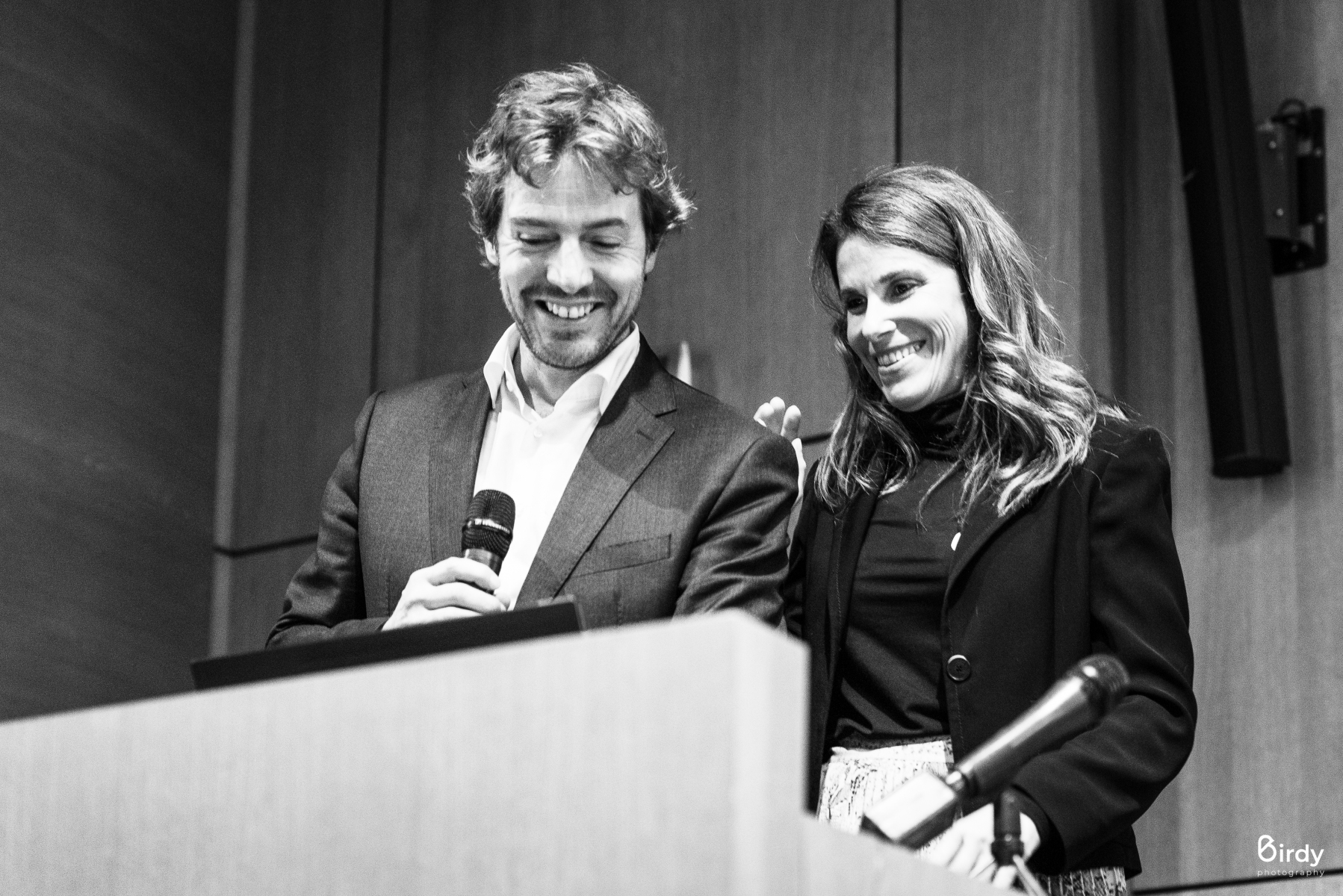
Ludivine Verboogen and Romain Alderweireldt
“There’s a paradox in rare disease research. Financing them is always a problem. But at the same time, research into rare diseases has led to significant advances in other, more common diseases. The added value that can be derived from this research goes far beyond the scope of rare diseases. If we analyze things very coldly, we can say that we’re missing out on enormous economies of scale by funding this research on rare diseases poorly, if at all.“.
Romain Alderweireldt and Ludivine Verboogen only need a few words to explain the meaning and significance for society of their joint commitment to the 101 Genomes Foundation. Their ambition ? Providing scientists with a bioinformatics platform to advance genomic research, one of the keys to a better understanding of rare diseases.
Life’s hazards give rise to a magnificent drive for the public good
The foundation’s story actually began on September 3, 2015 with the birth of Aurélien, Ludivine and Romain’s son.
The joy of the first few days was soon followed by concern : doctors suspect Marfan syndrome, a rare disease that can severely affect connective tissue, with heart-related consequences.
On August 4, 2016, 11 months later, a genetic analysis confirmed the bad news : Aurélien is a carrier of a spontaneous mutation of the gene FBN1. He does indeed suffer from a severe form of Marfan syndrome.
Late diagnosis and tools to be invented
This is a rare spontaneous variant of Marfan syndrome. This played a part in the 11-month delay in making the diagnosis : the reference center approached by the geneticist who was following Aurelien to carry out a genetic analysis was still using gene-by-gene analysis techniques, whereas genomic analysis techniques were available. “explains Ludivine. ” And it was during the many discussions we had with this geneticist, Professor Guillaume Smits, that we realized that the clinic lacked the physical and bioinformatics tools to take advantage of advances in genomic research, both in terms of diagnosis and the development of new treatments.says Romain.
” Six years later, it is possible to sequence the entire human genome, and identify mutations in all our genes at an increasingly affordable cost. But the initial cost of the machines is still very high, and genome sequencing is not yet part of routine research or clinical practice. A sequenced genome generates such a volume of data that it is absolutely impossible to process it manually : one genome corresponds to almost 300 gigabytes of data ! You need algorithmic tools, artificial intelligence and a highly specialized team to get anything out of it. This tandem between ICT and biological research has a name : bioinformatics. ”
Turning confusion into positive energy
For this legal couple, the realization of the need to invest in genomics and bioinformatics was a trigger. Ludivine and Romain have transformed their dismay into positive energy, with one objective in mind : to advance research and the clinic, and contribute to the emergence of treatments that will help Aurelien and other children suffering from rare diseases.
In search of the protective gene
Romain started devouring scientific studies. That’s how he came across the ‘Resilient Project’ and its reanalysis of nearly 600,000 exomes (the coding part of the genome). Many rare diseases, and Marfan syndrome in particular, are caused by pathogenic mutations, or if you prefer ‘anomalies’, in genes.explains Ludivine.
” By reanalyzing the data at its disposal, this study identified 13 adult carriers of a genetic anomaly that should have made them very ill, or even taken them away during childhood. These 13 people had reached adulthood “Romain continues. ” Why ? The presence of other genes with a protective effect counteracting the disease could be one explanation. Studying the genome of these individuals could therefore be the key to a better understanding of this protective mechanism. And this understanding could lead to the development of drugs or new treatments, for example based on the proteins produced by these genes. ”
Ludivine : ” Romain then decided to replicate this approach in the specific context of Marfan syndrome. And the incredible happened : he managed to find, in the global genomic reference database (gnomAD), carriers of pathogenic mutations supposed to be affected by a severe form of Marfan syndrome who apparently were not. It then became clear to us that if we could identify a protective gene, we could replicate its effects to develop a treatment. ”
The 101 Genomes Foundation and its pilot project
And in 2017, Ludivine and Romain launched the 101 Genomes Foundation.
The objective ? Develop a bioinformatics platform to host genomic data and cross-reference them with the medical records of people with rare diseases and ” control ” volunteers, to better understand the interactions between genes within the genome.
A pilot project was soon launched : the 101 Marfan Genomes project, which involved setting up a cohort of 101 Marfan syndrome patients to serve as a basis for research work. It quickly became clear that 101 genomes would only be the beginning, and that they needed to surround themselves with knowledgeable scientists.
The scientific committee at the Foundation’s helm is made up of the world’s leading experts in genomics, Marfan syndrome and algorithmics, including several Belgians. And on the side of these scientific experts, we admire the work accomplished by Ludivine and Romain, which they see as an unprecedented example of patient participation in scientific research.
” Work has focused on creating a cohort of patients with the same mutation to limit confounding factors (GEMS project), and in parallel on creating an algorithm designed to confirm (or refute) the pathogenic nature of mutations in the FBN1 gene. On this basis, we hope to explore the entire genome to identify modifier genes (protective or aggravating) for Marfan syndrome. Initial results are promising “says Romain. ” And the involvement of Innoviris has given this work a real boost. ”
GENOME4BRUSSELS, an ecosystem at the crossroads of 3 disciplines
Because Innoviris’ call for projects ‘From therapeutic medicine to predictive medicine : Prediction, Prevention, Identification’ was received 5/5 by Romain, Ludivine and the Foundation.
Aiko Gryspeirt, Scientific Advisor at Innoviris: ” Rare diseases still receive far too little attention. As a result, there is also a lack of funding for such research, both in terms of targeting the disease and its treatment. Patients often go from one specialist to another for months or years before getting a diagnosis. With GENOME4BRUSSELS, Ludivine and Romain have launched a fantastic initiative to make it easier to understand rare diseases, by collecting genetic data and sharing it with medical researchers and bioinformaticians in Brussels. It’s an invaluable project that can have a major impact on the lives of people with rare diseases. ”
“GENOME4BRUSSELS is a project financed by Innoviris, involving not only the Foundation, but also the Interuniversity Institute of Bioinformatics in Brussels, the Center of Human Genetics and the Machine Learning Group, all three at ULB. The aim is to create an ecosystem in Brussels dedicated to medical, genomics and bioinformatics expertise. This support has enabled our pilot project to move forward and combine our expertise to identify protective genes. that will pave the way for better patient care”,
concludes Romain.