
Genomics for rare diseases
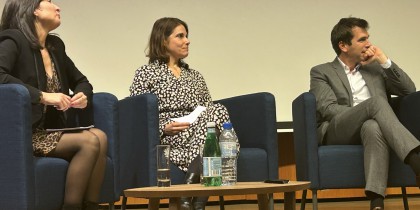
“101 Genomes enables researchers to explore the genome to better understand and treat rare diseases.”
Ludivine Verboogen
101 Genomes
101 Genomes supports genomic and bioinformatics research to better diagnose, understand and treat rare diseases.
101 Genomes’ initial focus is on a multi-system disease called Marfan syndrome, with the intention of extending it to other rare diseases.
With the support of the King Baudouin Foundation, Ludivine and Romain Alderweireldt-Verboogen created the 101 Genomes Foundation to help children who, like their little boy, suffer from a rare disease.

Support 101 Genomes
By supporting 101 Genomes, you are primarily funding research dedicated to Marfan syndrome, but you are also supporting a genomic approach that more broadly benefits many research groups active in the field of rare diseases.
What drives us
People with rare diseases teach us a great deal about who we are and what we are capable of giving. They ask us about our humanity.
Rare diseases force scientists to question biological mechanisms that concern us more broadly than the specific case of people suffering from rare diseases.
Research dedicated to rare diseases is advancing our understanding of the human genome, and this knowledge is paving the way for the treatment of rare and much less rare diseases.
People with rare diseases have so much to offer us all as a reward for what we have to do to help them.
Our model
The establishment of the 101 Genomes project dedicated to Marfan syndrome has made it possible to develop a model based on four pillars:
1. Administrative and Financial : Supervised by the King Baudouin Foundation
2. Legal and ethical : Dynamic consent and access management
3. Biological : Laboratory and Biobank
4. Digital: Cloud Genomics and Bioinformatics
At the initiative of patients (or patient associations), this model can now be used for genomic research into other rare diseases.
In all cases, it’s essential for patients to be the “triggers” behind a 101 project dedicated to the disease that concerns them.

GEMS
The GEMS App consent application enables anyone with Marfan syndrome to take an active part in research by joining the GEMS study, which aims to identify protective modifier genes in the context of cardiovascular damage in Marfan syndrome.
Anyone with Marfan syndrome can take part in the search for protective genes, although researchers are particularly interested in carriers of the FBN1 p.Ile2585Thr mutation (c.7754T>C).
In vivo, in vitro & in silico
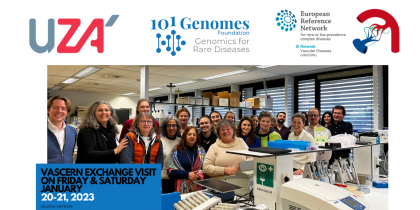
The GEMS study is being conducted jointly at UZ Gent and UZA: the Ghent and Antwerp laboratories are working on the search for protective genes in vivo (zebrafish) and in vitro (reprogrammed human cells called IPSCs).
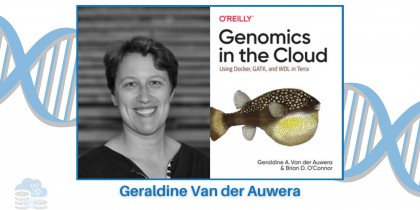
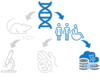
To bring the bioinformatics(in silico) part of this research to fruition, 101 Genomes created a Genomic Cloud in 2020 to house the digitized genomes of Marfan syndrome patients, enabling bioinformaticians to deploy their algorithms to identify protective genes.
Data altruism
101 Genomes, the first recognised altruistic genomic data organisation (DAO) in Europe.
We are proud to announce that in June 2025, 101 Genomes was recognised as a Data Altruist Organisation. It is currently the only genomic DAO in the European Union. You can view the DAO registry here.