“A unique and unprecedented example of patient participation in scientific research” by Prof. Dr. G. G. Anne De Paepe

 Rare genetic diseases, such as Marfan syndrome, have long been a neglected area of medicine. Because of their rarity, the knowledge and interest of the medical profession is often insufficient, so that many patients go through a long period of research to obtain an accurate diagnosis, follow-up and possible treatment. Because of the small number of patients, pharmaceutical companies are generally uninterested in investing in research that could lead to better treatments.
The increased attention paid to rare diseases by the scientific and medical community and, more recently, by national and European political decision-makers, is mainly due to patient associations, who have understood that they themselves must advocate their own cause. The significant advances in scientific knowledge and the renewed interest in these rare diseases are therefore largely due to initiatives taken by patients and their families. They have worked hard to improve communication and knowledge about rare diseases, and to launch large-scale fundraising initiatives to raise the financial resources needed to support research. In this respect, Marfan syndrome patient associations are exemplary, with the ABSM in Belgium among others, and the French and American Marfan associations which have been working for years with dedication and efficiency to support the scientists and clinicians involved.
Patients with Marfan syndrome are at increased risk of serious cardiovascular complications leading to premature death. Although life expectancy has improved considerably in recent years thanks to more accurate and rapid diagnostic methods and the possibility of preventive aortic surgery, there are currently no adequate drugs to prevent, treat or cure the serious complications of the disease, let alone prevent it. Great progress has been made in diagnosing and determining the genetic dysfunction responsible : it’s a mutation in the gene encoding fibrillin-1, a protein important for the formation of connective tissue supporting the aortic wall, among other things. Today, many fibrillin-1 mutations are known, and molecular testing in the diagnosis of a suspected case of Marfan syndrome has become almost standard. However, the discovery of the responsible gene and its alterations did not explain the great variability in the severity of clinical manifestations, a variability according to which patients, even those with the same fibrillin-1 mutation – both within the same family and between different families – show considerable differences in the nature and severity of clinical symptoms, complications and life expectancy. Why does one patient present with life-threatening aortic dilatation and another with mild heart valve prolapse ? Why does one patient suffer from severe eye problems and another only mild myopia ? And why are skeletal anomalies so variable ? Are certain hereditary and/or environmental factors protective and others aggravating ?
The extraordinary developments we are currently experiencing in gene technology (including whole genome sequencing) and bioinformatics offer unprecedented prospects for discovering new research strategies that may lead to an answer to these questions.
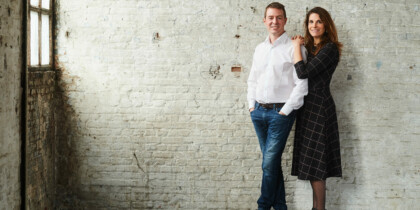
Romain and Ludivine Alderweireldt, parents of Aurélien, who suffers from Marfan syndrome, understand this very well. Driven by exceptional motivation and determination to make a quantum leap from ” 10 years “In this way, they were able to give their son – and with him the entire Marfan community – the opportunity to make a significant contribution to scientific research into Marfan syndrome. – With the support of the King Baudouin Foundation, they set up their 101 Genomes Foundation to raise the necessary funds (fundraising).
With the 101 Marfan Genomes project, they aim to provide a bioinformatics platform that will contain highly accurate clinical and genomic data on a cohort of 101 Marfan patients with varying clinical profiles and symptom severity. This platform can be consulted and used by all the researchers involved worldwide, on justified request. By cross-referencing phenotypic and genomic databases, they hope to identify the ” modifier genes ” that determine clinical variability, possibly exerting a ” protective ” or ” aggravating ” effect, and could thus lead to the discovery of new drugs or treatments that could prevent serious complications.
The project is stimulating and highly ambitious and, as with all innovative and original research, the outcome is not predictable. It is certain to lead to new discoveries that will be useful not only for Marfan syndrome, but also for many other genetic diseases.
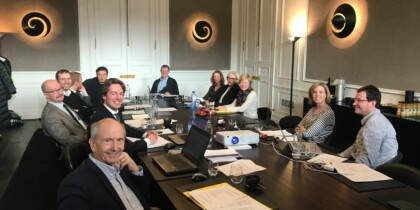
Romain and Ludivine have assembled a multidisciplinary team of top-level clinical and genetic experts on Marfan syndrome in Belgium and Paris, as well as experts in molecular biology and bioinformatics. They also surround themselves with invaluable legal and ethical expertise. The chosen research strategy is unique, building on already interesting preliminary results and using the latest, most effective techniques for whole-genome analysis. In addition, particular attention will be paid to the recording of accurate clinical data, which is one of the most difficult and delicate aspects and therefore often the weakest link in this type of research initiative. Finally, thanks to the relationships established, this project will be aligned with major European initiatives, such as the European Reference Network (ERN), and will be brought to the attention of major international consortia focusing on Marfan syndrome and aortic aneurysms, such as the Montalcino Aortic Consortium (MAC).
Romain and Ludivine’s enthusiasm and motivation make the 101 Genomes project a unique and unprecedented example of patient participation in scientific research. They are a fantastic model and a source of inspiration for many other rare diseases ! They deserve all our support, respect and admiration !
Anne De Paepe
President of the Management Committee of the 101 Genomes Fund at the King Baudouin Foundation
Professor of Human Genetics and Rector of Ghent University