 1. Could you please introduce yourself?
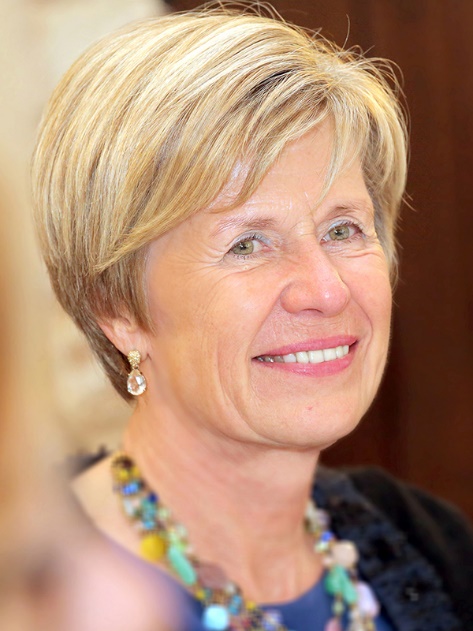
My name is Anne De Paepe, I’m Prorector of Ghent University, Professor of Human Genetics and Clinical Head of the Department of Medical Genetics in Ghent, where I’ve set up a research unit and clinical service specializing in connective tissue diseases, including Marfan syndrome. Studying the genetic causes and pathogenesis of these rare diseases, so as to be better able to help affected patients and families, has been the common thread running through my entire professional career. I therefore readily accepted Mr. and Mrs. Alderweireldt’s request to chair the Management Committee of the 101 Genomes Fund, which they set up within the King Baudouin Foundation to raise the funds needed to finance the 101 Genomes project.
2. Can you tell us about the Marfan 101 Genomes Project?
The 101 Genomes Marfan Fund was set up by Romain and Ludivine Alderweireldt, parents of Aurelien, who suffers from Marfan syndrome, with the aim of supporting scientific research into this disease and finding therapeutics that could improve the living conditions of Marfans by avoiding, for example, major surgery. Although the genetic cause of Marfan syndrome is known to be a mutation in the fibrillin-1 gene – an important structural protein in connective tissue – At present, we still can’t explain the great clinical variability of Marfan, where even within the same family with an identical mutation, the intensity of cardiovascular, ocular and skeletal damage is highly variable.
Taking advantage of new genomic techniques and bioinformatics, the Fund wants to set up a computer platform capable of cross-referencing phenotypic data on the one hand, and genomic data on the other, from a cohort of 101 marfans, with the aim of identifying the genetic determinants that may explain the severity or lack of severity. Initially, the project will focus on patients with identical mutations, but with varying degrees of cardiovascular impairment. In a second phase, other systems associated with Marfan will be covered. The hope is to find ” modifying genes ” that can modulate severity and lead to the development of new protective therapeutics that can slow progression or even prevent deleterious manifestations. (and thus improve life expectancy).
3. Why did you agree to join the Scientific Committee of the 101 Genomes Foundation’s Marfan 101 Genomes Project?
Rare diseases, in this case connective tissue disorders such as Marfan syndrome, have been at the heart of my professional activities for many years. Although much progress has been made in the search for the genetic causes of these diseases, therapeutic possibilities are still very limited. There is a great need to find a therapy that can significantly improve the quality of life of patients and families, and even, in the extreme, prevent the development (serious manifestations) of the disease altogether. For this, concerted action by research teams and clinicians specializing in the field is essential. This is exactly the case with this project, which brings together specialized teams in Belgium and beyond, while also calling on the collaboration of the high-performance team of Professors Boileau and Jondeau in Paris.
The fact that this initiative comes from the Alderweireldt family, directly confronted with the disease, makes it a unique and exemplary adventure which will certainly be a source of inspiration for future initiatives in the field of rare diseases.
4. As a scientist, what do you expect from the 101 Marfan Genomes Project of the 101 Marfan Genomes Foundation?
First and foremost, as a physician and scientist, I obviously aspire to discover effective therapeutic means that can prevent or delay clinical manifestations and thus offer a better quality of life and outlook for marfan patients and families.
What’s more, I’m convinced that the 101 Marfan Genomes project is a formidable model and a source of inspiration for many other rare diseases, and I therefore hope that it will spawn similar initiatives that will bring together national and international scientists and doctors who are joining forces to tackle the difficult but necessary challenge of discovering effective treatments.
The strategy deployed in this project could be very useful to a much wider community of scientists and researchers in the field of genetic diseases, and could shed light on the understanding of more common diseases such as aortic aneurysms, for example.
Finally, I hope that this project can be aligned with European and international initiatives and consortia already underway, such as the European Reference Network .
5. What do you see as the key element that makes the 101 Marfan Genomes Project important for Marfan patients? What about other rare diseases?
As already mentioned, the fact that this project brings together different national and international research teams and medical specialists around the same cause, as well as the project’s unique strategy, makes it a model for many other rare diseases.
But for me, the key element is above all the extraordinary dynamism and motivation of the couple Romain and Ludivine, who want a better future not only for their son but for all Marfans and their families, and who have succeeded in mobilizing not only the appropriate scientific and medical community but also the Marfan Association, the King Baudouin Foundation and already an impressive number of patrons, to support their dream. creating a better life for their son Aurélien and for all marfans and their families !