101 Genomes Foundation, 101 Genomes Fund & Marfans 101 Genomes Project

101 Genomes Foundation (F101G)
The 101 Genomes Foundation was created in November 2017 by the parents of a little boy suffering from a rare disease.
F101G aims to promote research by providing scientists with a cross-referenced database containing genomic and phenotypic data on patients suffering from rare diseases. The hope is that this tool, accessible via a secure computer platform, will enable researchers to identify the existence of possible modifier genes that would protect certain individuals against the main disorders generally caused by the rare disease that affects them. The identification of possible modifier genes could lead to the development of treatments that replicate the effects of these protective modifier genes in patients in whom these genes are not activated in the same way.
The F101G was born of an interview with Professor Hal Dietz
The F101G was born out of an interview with Professor Hal Dietz in which he mentioned that the cross-referencing of genomic and phenotypic data could help to understand “how natural genetic variants can protect some people from the consequences of a fibrillin-1 mutation” and that on this basis scientists might eventually be able to “identify drugs capable of mimicking nature’s successful strategy” [WEISMAN R., “Meet Your Gene: An Introduction to the Marfan Gene and Current Research“, January 10, 2017 available here].
This approach is in line with those of Genome-wide association studies (GWAS), which have already met with some success in the study of certain rare diseases. [RIORDAN J.D., NADEAU J. H., “From Peas to Disease: Modifier Genes, Network Resilience and the Genetics of Health” in The American Journal of Human Genetics, 101, 177-191, August 3, 2017, http://dx.doi.org/10.1016/j.ajhg.2017.06.004].
F101G intends to capitalize on advances in genomics (Whole Genome Sequencing – WGS) to offer new therapeutic approaches to patients suffering from rare genetic diseases. In concrete terms, the F101G intends to raise funds to set up a bioinformatics platform that can host projects specific to different rare diseases, such as the 101 Marfans Genomes Project described below.
~
101 Genomes Fund
F101G has joined forces with the King Baudouin Foundation to jointly manage the 101 Genomes Fund , which aims to
raise the funds needed to finance
to finance its activities.
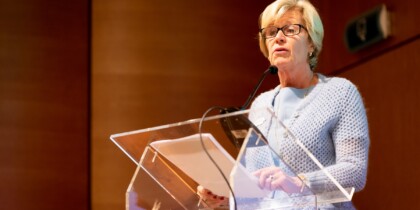
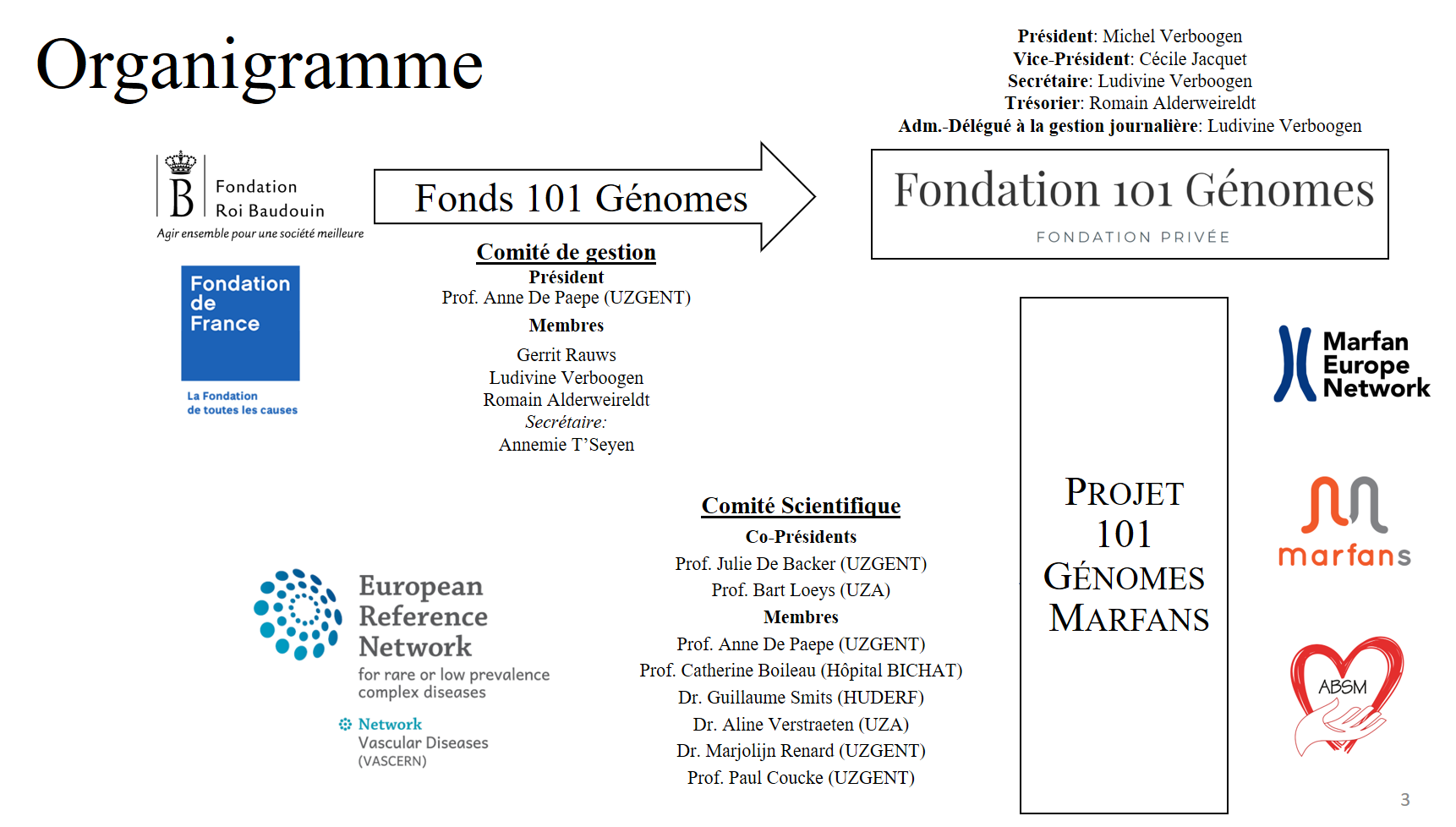
The Fund Management Committee met for the first time on January 11, 2018, in the presence of its Chairman, Madame le Professor Anne De Paepe, Mr Gerrit Rauws (Director of the King Baudouin Foundation), Mrs Annemie T’Seyen (Project coordinator at the King Baudouin Foundation) and two representatives of the F101G.
To mark Rare Disease Day on February 28, 2018, the King Baudouin Foundation has published an account of the circumstances that led to the creation of the 101 Genomes Fund. The King Baudouin Foundation also published an article about the 101 Genomes Fund in issue 112 of “Champs de vision” magazine (available here in French and here in Dutch).
The King Baudouin Foundation invited F101G to join the workshops dedicated to thinking about the use of genomic data in healthcare, the first module of which was organized on February 23, 2018. This reflection is being conducted in parallel with the publication on February 19, 2018 by Centre Fédéral d’Expertise des Soins de Santé (KCE) of a report on the challenges posed by whole genome sequencing (WGS) for the Belgian healthcare system. This report recommends the cautious introduction of WGS in Belgium as a pilot project. Complementarities between the F101G’s action and the Pilot Project recommended by the KCE could be envisaged.
~
Marfans 101 Genomes Project
The 101 Marfans Genomes Project (P101GM) is the F101G pilot project. P101GM is dedicated to Marfan syndrome. It is based on an initial (and expandable) cohort of 101 Marfan syndrome patients who are willing to share their genomic and phenotypic data, so that researchers can attempt to identify the existence of any modifying genes in them that might protect them from cardiovascular damage (and possibly later from musculoskeletal and ocular damage).
The reactions of the scientists to whom the P101GM was submitted were particularly positive. Professors Anne De Paepe (UZGent), Julie De Backer (UZGent), Paul Coucke (UZGent), Marjolijn Renard (UZGent), Bart Loeys (UZAntwerp), Aline Verstraeten (UZAntwerp), Guillaume Smits (HUDERF) and Catherine Boileau (Hôpital Bichat, Paris) have agreed to join the P101GM Scientific Committee.
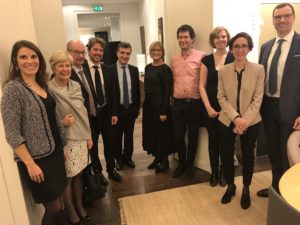
From left to right : Mrs Ludivine Verboogen (F101G), Professor Anne De Paepe (UZGent), Doctor Michel Verboogen (F101G), Mr Romain Alderweireldt (F101G), Mr René Havaux (Banque Delen), Mrs Cécile Jacquet (F101G), Professor Bart Loeys (UZA), Madame le Docteur Aline Verstraeten (UZA), Madame le Professeur Julie De Backer (UZGent) and Monsieur le Docteur Guillaume Smits (HUDERF) at the philanthropic evening organized by Bank Delen on November 23, 2017 in the presence of H.HRH Prince Lorenz of Belgium.
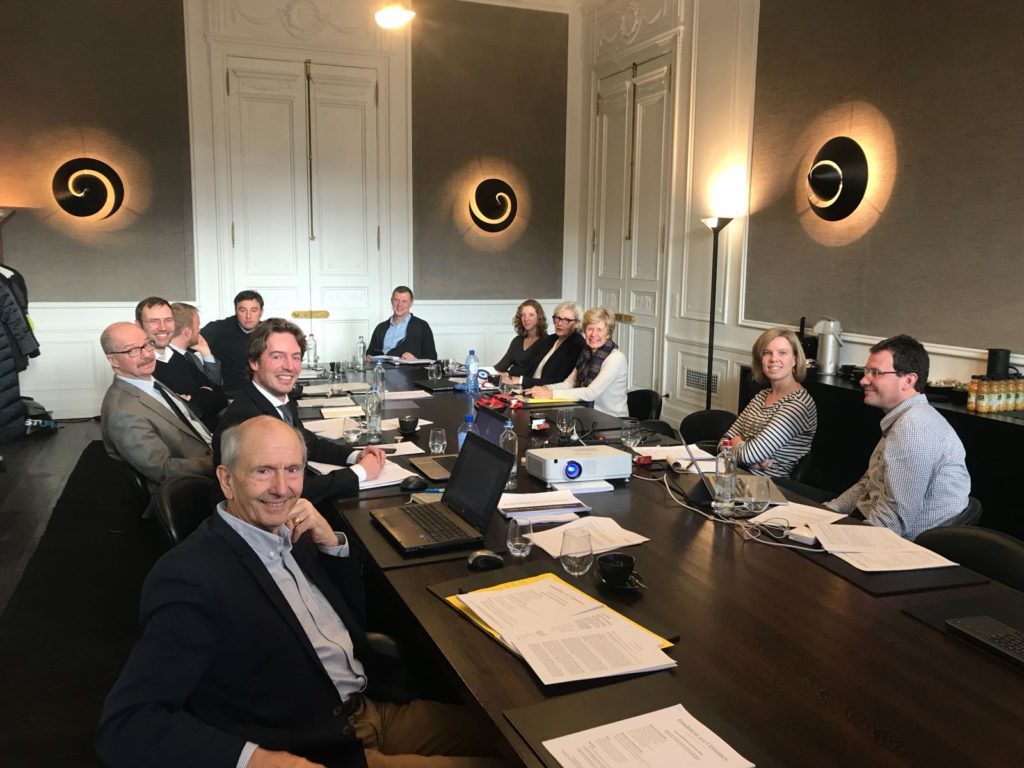
The P101GM Scientific Committee met for the first time in Brussels on January 19, 2018 with the dual aim of: (1) determining the phenotypic data to be collected to ensure that the bioinformatics tool best meets the needs of the research community when it becomes operational; (2) consider different cohort composition strategies that would maximize the likelihood of advancing researchers’ understanding based on the genomic data of 101 participants. This meeting enabled significant progress to be made.
~
Patient associations
Véronique Vrinds, President of the Association Belge du Syndrome de Marfan (ABSM), Patrice Touboulie, President of the Association Française du Syndrome de Marfan(AssoMarfans), and Lauriane Janssen, President of the Marfan Europe Network(M.E.N.), offered the support of their respective organizations to P101GM.

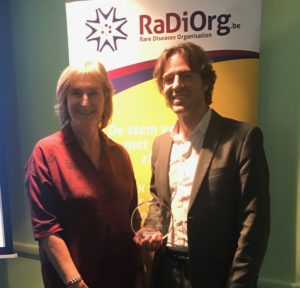
ABSM has taken the initiative of nominating one of F101G’s founders for the 2018 Edelweiss Prize awarded by RaDiOrg -the coupole association that brings together the bulk of Belgian rare disease patient associations- in recognition of a unique contribution to a rare disease network. We were very surprised and above all honored to receive this award on March 10, 2018.
During his lifetime, Monsieur Touboulie, President of the French Marfans Association, had expressed the wish to become personally involved in promoting the F101G in France. He had taken a series of steps which culminated, in particular, in the opening of an account for the F101G at the Fondation de France.
Support from the French Marfans Association came in the form of an invitation to present the 101 Marfans Genomes Project at the national Marfans meeting organized by the French Association on March 24, 2018 in Paris (the document that served as the basis for this presentation can be downloaded by following this link: 20180509 F101G P101GM MASTER).
The President of the M.E.N. has arranged for the 101 Génomes Marfans Project to be invited to present a poster at the 10
th
International Research Symposium on Marfan Syndrome and Related Disorders organized by the Marfan Foundation from May 3 to 6, 2018 in Amsterdam(the abstract of this poster can be downloaded here).
The genesis and objectives of the 101 Genomes Project dedicated to Marfan syndrome are outlined in the following video:
~
To find out more, download…
Our PPT presentation of the F101G and P101GM:
- In French: 20181022 F101G P101GM Eurordis EN DEUX PAGES
- In English: 20181022 F101G P101GM Eurordis EN TWO PAGES
- In Dutch: 20180923 02 F101G FAMHP VASCERN & 101G NL for FAMHP
- In Dutch: 20181212 DE PAEPE presentatie F101G VVO leuven version presented by Professor Anne De Paepe :
Reviews of the F101G and P101G :
- In French: 20181018 ABSM 056 Spécial F101G
- In Dutch: 20181220 BINDSWEEFSEL Versie
The scientific poster presented at the 2018 Marfan Symposium in Amsterdam:
The white paper of the F101G and P101GM:
- In French: 20181203 F101G Livre blanc EN
- In English: 20181203 F101G White paper EN
~
~
Administrative information
F101G was created on November 10, 2017. It bears company number BE0684609172. Its articles of association were published in the annexes to the Moniteur Belge on November 14, 2017. Its day-to-day management has been entrusted to its Managing Director, Ludivine Verboogen.
The Agreement signed on November 17, 2017 with the King Baudouin Foundation provides that donations made in Belgium, Luxembourg and the Netherlands intended for the F101G are paid to the Banque de la Poste account IBAN: BE10-0000-0000-0404 (BIC: BPOTBEB1) accompanied by the structured communication ***017/1730/00036***.
Donations made in Belgium to the F101G are tax-deductible up to 45% of the amount donated.
Donations made in Luxembourg to the F101G are tax-deductible up to 100% of the amount donated.
In the Netherlands, donations to the F101G of less than 5,000 euros are tax-deductible at 125% of the amount donated, above 5,000 euros donations are tax-deductible at 100% of the amount donated +1,250 euros.
Donations made in France for the F101G are paid to the Fondation de France :
- via the FdF online payment module by selecting “TGE- 101 Genomes Fund” in the “Belgium” menu;
- by making a bank transfer to the HSBC account IBAN: FR76-3005-6005-0205-0200-0363-678 (BIC: CCFRFRPP) accompanied by the communication “00459/ TGE- 101 Genomes Fund”;
- by cheque made out to “Fondation de France/00459/ TGE-Fonds 101 Génomes” to for the attention of Noura Kihel at Fondation de France, Avenue Hoche 40, 75008 Paris, France.
Donations made in France to the F101G are 66% tax-deductible.